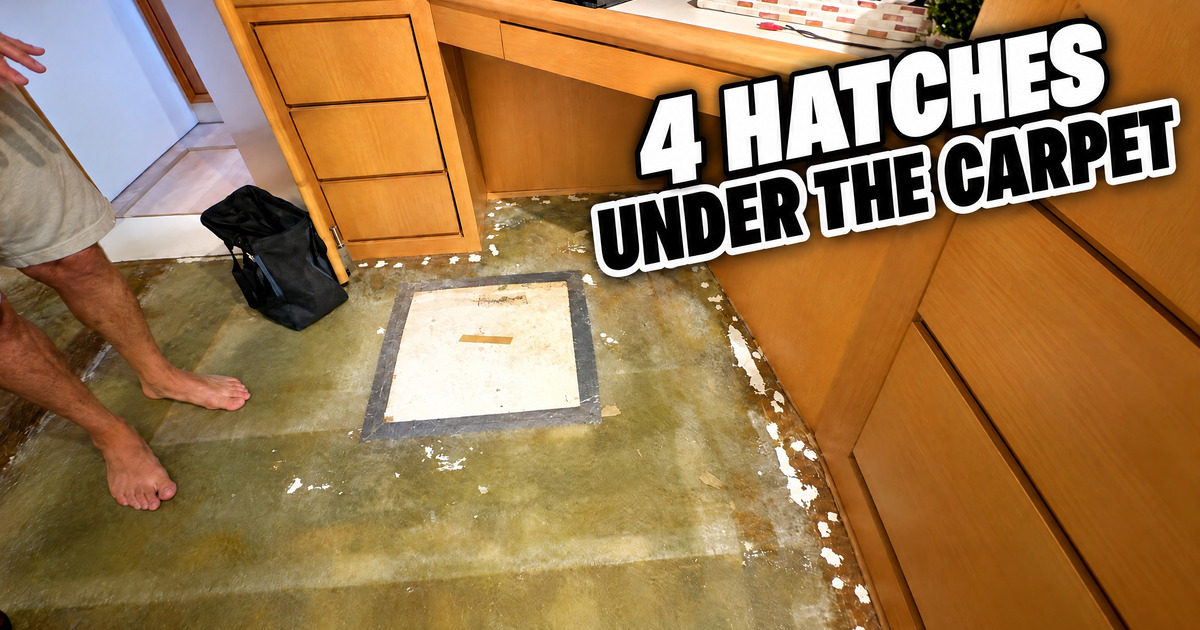
There were several times I wanted to get under the floor in Empire’s master stateroom and couldn’t figure out how. Then Trish and I pulled up the old carpet and padding, and there were four access hatches we had no idea existed.
Four. Apparently, access was available. The carpet had declined to mention it.
Empire is our 1998 74-foot Hatteras. We pulled all of the 30-year-old carpet and padding out of the master stateroom, including the closet, right down to the fiberglass. Finding those hatches was the biggest surprise, but the room had another one waiting for us.
The engine-room smell went with the carpet
The master stateroom had always had a mechanical, engine-room smell. Once the old carpet and padding were out, it basically smelled like nothing.
For a room you sleep in, that’s a pretty substantial improvement.
Old carpet and padding can hold onto odors, and in our case the difference was obvious as soon as those materials were gone. The padding deserves attention during a flooring project, too. Getting everything out let us see the bare fiberglass and what had been buried under it.
Four hatches I wish I’d known about sooner
This area is at the very back of the boat, above where the two engine shafts exit. To give you a sense of the layout in the video, the propellers are roughly beneath where Trish is standing.
Those hatches let us check for hoses, equipment and bilge water under the floor. They also provide access to replace a freshwater line or reach lines and cables running aft.
That’s useful access to have in a boat, and particularly frustrating access to discover after you’ve already wanted it several times. I could have used a hatch. Instead, I had a carpeted floor with no obvious way underneath.
Trish sealed every tack-strip hole
The old carpet left something less exciting behind: holes in the fiberglass where the tack strips had been attached.
Before the new carpet went down, Trish filled every one with Marine-Tex, an epoxy that cures very hard. The purpose was to seal those openings against moisture getting into the fiberglass.
It’s easy to focus on the new carpet while the floor is bare, but this is exactly the time to deal with the small holes left by the old installation. Once padding and carpet cover them, they’re out of sight again.
For a similar repair, follow the epoxy’s surface-preparation and curing instructions before covering it. The finished room hides this work, but I’d rather have those holes properly filled than simply hidden under a fresh floor.
The new carpet leaves the access intact
When the installers put in the new carpet, they fitted it around the hatches so they stay permanently accessible. The hatches are tight and don’t wobble.
That was an important part of finishing the room. We’d found useful maintenance access, and burying it again would have put us right back where we started.
Before new flooring goes down on a boat, locate the access panels and agree with the installer on how they’ll remain usable. A photo of the exposed floor can also give you a reference for the layout later. That’s especially handy when several panels disappear into a similar-looking carpeted surface.
Once the installation is finished, open each hatch. You want enough clearance around the edges for it to move without fighting the surrounding carpet. Discovering a problem then is much better than discovering it while trying to reach a leaking line.
We’ve also written about why we pulled the carpet off our yacht’s stairs. Carpet gives us plenty to talk about aboard Empire. You can see the finished room in our stateroom reveal.
Watch Would You Live Here? Our 30-Year-Old Hatteras Stateroom on our YouTube channel, or find it on the stateroom restoration episode page. Sign up for the Anchors to Axles newsletter below to keep following along with Trish and me, including the bits of boat ownership hiding under the carpet.