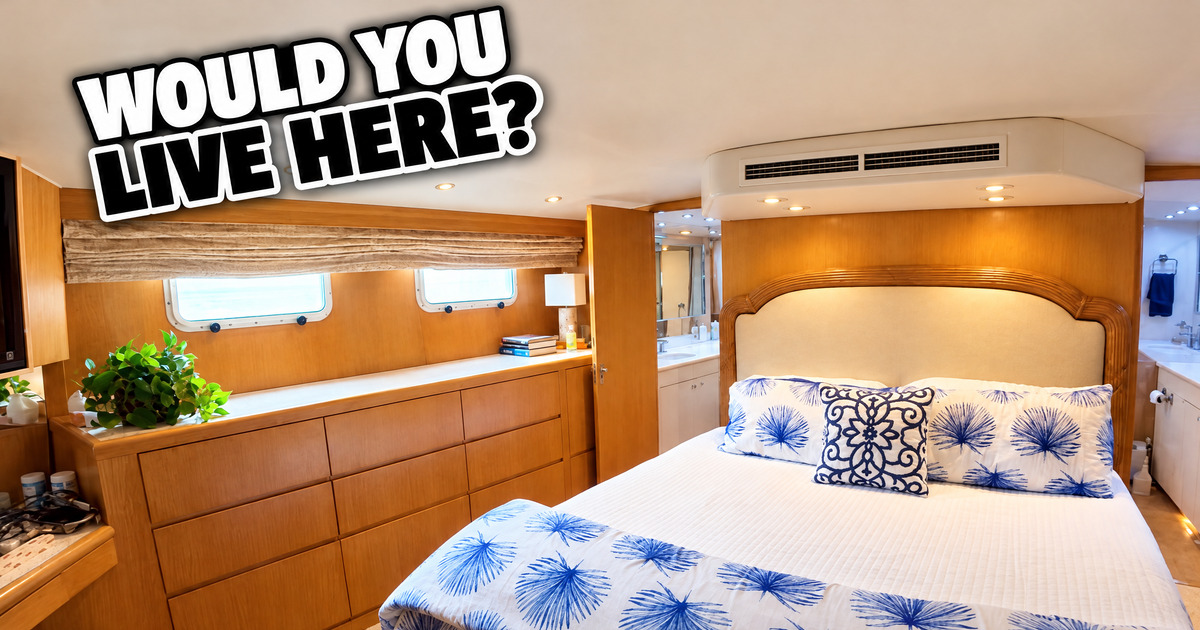
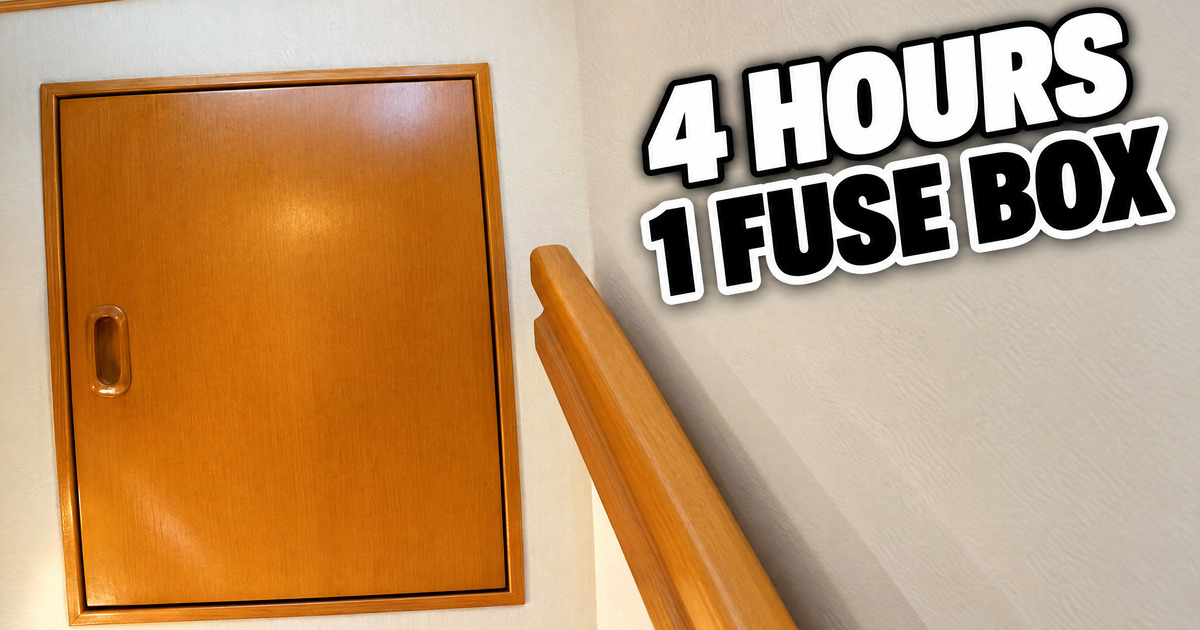
I went to Empire, our 1998 74-foot Hatteras, to replace LED bulbs in the master head and stateroom. I never made it to the stateroom. One side of the master head lighting shorted out completely, and a bulb swap became about four hours of hunting for a fuse box.
Here’s the useful part for another Hatteras owner: on our boat, the lighting transformers and fuses are behind a removable cabinet in the stairwell leading down to the master stateroom. Four screws give you access. Our ship’s diagrams sent me behind a completely different wall.
The drawing sent me to an exhaust pipe
On our Hatteras, the lights run to a relay. Each relay box holds a transformer and a fuse, so finding the right box became the job.
Our ship’s diagrams are pretty detailed. They placed the box behind a wall in the master stateroom, which gave me a specific place to start taking things apart.
Unfortunately, behind that wall was a big engine exhaust running out the back of the boat. No lighting fuse box. I had followed the paperwork straight to the wrong piece of boat.
Then everything I had taken out had to go back. A fine exercise in disassembly and reassembly, with absolutely no improvement in the lighting situation.
That’s the trouble with treating decades-old drawings as the final authority. A drawing can be wrong, and a boat can change over time. I can’t tell you why ours pointed to the wrong location. The practical lesson is to use the diagram as a lead and verify it against what’s actually installed.
Where to look on our Hatteras
After I went home, I looked it up online and found the answer: the cabinet in the stairwell down to the master.
Before removing electrical covers or handling fuses, isolate the relevant power sources and verify that the circuit is de-energized. If you cannot identify the feeds, get a qualified marine electrician involved.
The cabinet access on Empire works like this:
- Remove the four screws holding the cabinet in place.
- The door pops off, and the whole cabinet comes out.
- Behind it are two sets of transformers, with the fuses in the relay-box assemblies.
That was the hiding place I had spent hours trying to find.
The box serves quite a bit of the DC side on our boat, including things upstairs and some things in the master stateroom. There’s another box on the other side of the boat serving other circuits. A light’s location alone is a poor guide to where its fuse will be.
For another Hatteras owner chasing a similar problem, that stairwell cabinet is a useful place to check against your own installation.
The next problem was the spare fuse
Finding the box brought us to the next snag: the transformers take fuses we did not have aboard that day.
When identifying spares, record the full fuse specification, including the physical size, current rating and operating type. Match the specified fuse, rather than choosing something that happens to fit. A higher-rated fuse can leave the wiring inadequately protected.
And if a replacement blows, stop and investigate the fault. Repeatedly replacing fuses won’t fix the reason they’re opening.
Leave better clues for the next search
A label that just says “lighting” won’t help much on a 74-foot boat with circuits served from different locations.
My takeaway is to record both where a box is accessed and which circuits it actually serves. For this location, an access note could read: “Behind removable cabinet in stairwell to master stateroom. Four screws.” Add a photo, then document the circuits as they are positively identified.
Keep that information alongside the original diagrams. The next person looking for a lighting fuse could be an electrician, a future owner, or me, hoping to finally get back to those stateroom bulbs.
For a closer look at the space, watch Would You Live Here? Our 30-Year-Old Hatteras Stateroom on our YouTube channel, or visit the episode page. Trish and I share the work behind the adventure through Anchors to Axles. Sign up for the newsletter below to keep following life aboard Empire, including the jobs that take a few more hours than expected.