A beautiful anchorage loses some appeal when the cabin smells like a holding tank. So does a mountain campsite when the RV bathroom announces itself from the doorway. Another scented tank treatment might disguise the problem, but finding the source gives you a chance to fix it.
Start by noticing when the odor appears. A smell during the first toilet flush points somewhere different from a smell coming only from hot water. These seven fixes cover common culprits on boats and RVs.
One safety distinction matters: rotten-egg odors can also indicate a fuel-gas leak. If that’s possible, leave the space without operating electrical switches or creating flames, and get emergency help.
1. Restore drain seals and clean the sump
An RV sink or shower can smell because its P-trap has dried out. Running water restores the barrier between the living space and the gray tank. Some installations use waterless drain valves instead; inspect those according to their instructions.
Boat drains aren’t all arranged alike. A shower may empty into a sump rather than a holding tank. Hair and soap residue in that box can smell impressively bad. Clean the sump and strainer, then confirm the pump empties it properly. Pouring fragrance down the drain leaves the actual problem sitting in the box.
2. Fix the toilet’s odor barrier
Many RV toilets retain a little water in the bowl. If it disappears between uses, debris or wear at the blade or ball seal may be allowing odors through. Clean and inspect the seal with toilet-approved products; replace it if necessary.
Marine heads can have a different culprit. Stagnant seawater in a raw-water intake can produce odor during the first flush. Follow the head manufacturer’s intake-maintenance procedure. Never improvise a connection between a raw-water toilet and the drinking-water system.
3. Clear the vent before blaming the filter
Holding tanks need an open vent path. A clogged outlet or kinked hose can interfere with flushing and expose a tank to damaging pressure or vacuum during emptying.
Inspect accessible vent plumbing and outlet screens, if fitted. Where a marine holding-tank system uses a carbon vent filter, replace it according to the manufacturer’s instructions. A filter soaked by an overfilled tank may also need replacement.
A fresh filter cannot fix an obstructed vent. Don’t add one to an RV roof vent unless the system manufacturer approves that arrangement.
4. Give holding tanks a better routine
For most gravity-flush RV black tanks, leaving the dump valve open at a sewer hookup lets liquid escape while solids collect. Keep it closed until dumping, and use enough flush water to carry waste into the tank.
After dumping, add the starting water specified for the system. With a shared sewer outlet, empty black before gray so gray water helps rinse the hose. That rinse doesn’t disinfect it.
On a boat, use pump-out facilities before the holding tank becomes overfull. Keep sewage-rinsing equipment separate from potable-water hoses. Tank additives can’t compensate for too little water or delayed emptying.
5. Replace leaking or permeated sanitation hose
Inspect accessible waste connections for moisture or staining. Repair leaks before chasing less obvious causes.
Older marine sanitation hose can also let odor pass through its wall without visibly leaking. Wearing gloves, wipe a clean damp cloth along the outside of a dry hose, then check the cloth away from the plumbing. Sewage odor can point to permeation, though contamination on the hose’s exterior can produce the same result.
Once failed hose is identified, replace it with sanitation-rated hose suitable for the installation. Air freshener has no useful role in that repair.
6. Sanitize the whole freshwater system
If both hot and cold water smell, check the incoming water first. If the supply is clean, stagnant water or buildup inside the onboard system may be responsible.
Follow the boat or RV manufacturer’s sanitation procedure, including the prescribed disinfectant concentration and contact time. Treat the tank and plumbing, handle filters as directed, then flush as instructed. An unmeasured splash of bleach isn’t a sanitation routine.
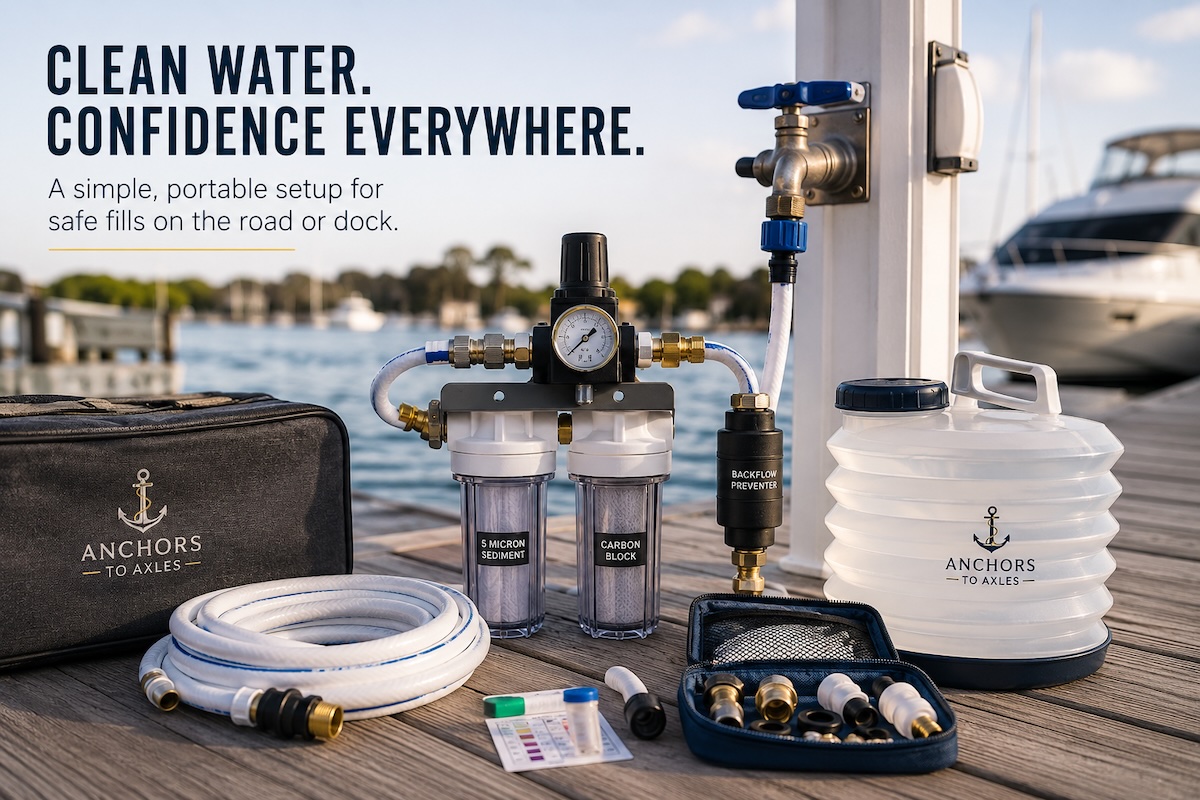
Never mix sanitizers with other cleaners. Clean fill fittings and a dedicated potable-water hose also help keep contamination out in the first place.
7. Treat hot-water odor as a separate problem
If only hot water smells, focus on the heater. In some tank-style heaters, bacteria and reactions involving the sacrificial anode can contribute to sulfur odors.
Use the heater manufacturer’s cleaning procedure and specified replacement anode, where fitted. Removing a required anode can trade an odor problem for tank corrosion.
Before draining or opening a heater, shut off its energy supplies and let it cool. Relieve pressure according to the manual. Never energize an empty heater.
Follow along with us at Anchors to Axles for more practical boat and RV systems content, including the less photogenic work that makes life at the dock or campsite a lot more pleasant.