Bad water is a lousy souvenir. At a dock or campground, one questionable fill can turn a convenient spigot into a tank full of trouble, with hoses and fixtures to clean before the next stop.
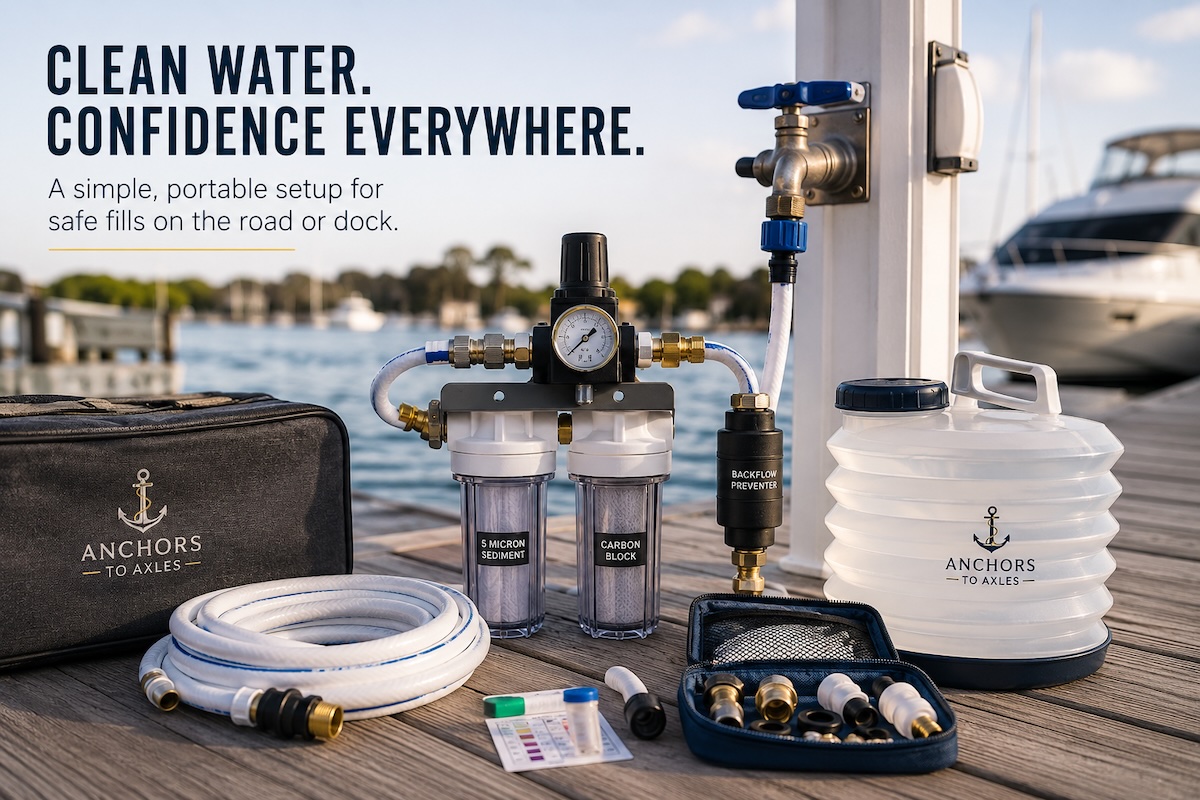
The useful kit is modest: a suitable filter, a drinking-water hose with compatible adapters, and collapsible jugs for a separate reserve. But the most important part doesn’t fit in a storage bin. It’s knowing when not to connect.
Start with the source, not the filter
A faucet beside your slip or campsite isn’t automatically a drinking-water source. Ask staff which outlet supplies potable water and whether any current advisories apply. For a private well, ask about current water-quality testing.
Unusual color or a fuel or sewage smell is a stop sign. Clear, odorless water, however, isn’t proof of safety.
If nobody can establish that the source is potable, use known-safe water or find another fill point. An ordinary inline filter isn’t a reason to gamble with an entire tank.
Choose filters for a specific job
Sediment filters catch grit. Activated carbon can reduce chlorine taste and odor. Useful jobs, both, but neither function establishes protection against disease-causing organisms.
Look for independent certification covering the specific contaminant reduction you want. For example, NSF/ANSI 42 certification for chlorine taste and odor doesn’t establish that a filter removes bacteria or viruses. A small micron number alone doesn’t prove virus protection, either.
For tank filling, match the filter to the intended flow and connection. Follow its initial flushing instructions and cartridge replacement schedule. A tired cartridge doesn’t get better because it’s been on more adventures.
Suspected chemical contamination or saltwater intrusion calls for another source, not an ordinary camping filter. Boiling doesn’t solve those problems either. Trust the verified treatment claim, not reassuring packaging.
Collapsible jugs are your exit strategy
A separate reserve of known-safe water lets you pass on a questionable fill without immediately abandoning the trip. Carry enough for drinking and cooking until your next reliable supply, accounting for everyone aboard.
Choose containers specifically intended for drinking water, with secure caps and a design you can actually clean and dry. Saving storage space is useful; owning a damp accordion you can’t clean is less impressive.
Keep jugs dedicated to potable water. Never repurpose a fuel or chemical container. Secure filled containers for travel, keep their spouts clean, and dry them thoroughly before storage.
Adapters should solve fit problems, nothing more
Use a potable-water-rated hose and fittings compatible with your actual inlet. Carrying the right adapter beats forcing a near-fit connection while water runs down your sleeve. Store the hose separately from waste-system equipment, with its ends capped.
For a direct pressurized hookup on a boat or RV, use a regulator set within the system manufacturer’s limits. A gravity tank fill is different: don’t seal the hose into its opening or obstruct the tank vent.
A quick connector doesn’t provide backflow protection unless specifically designed to do so. Keep the site’s protective devices in place rather than bypassing them to make your fittings work.
Run this check before taking on water
Once you’ve established that the source is potable, give the connection itself some attention.
- Inspect the spigot and surrounding area. Skip waste-rinse outlets and shared hoses with an unknown history, even if they’re conveniently within reach.
- Start with clean hands and clean hose ends. Keep fittings off the dock or ground. If an end becomes contaminated, clean and sanitize it according to the equipment’s instructions.
- Flush the outlet before connecting, then flush the filter as its manufacturer directs. This can clear standing water and debris; it doesn’t certify the source as safe.
- Verify the correct inlet before opening the supply. On a boat, positively identify the freshwater deck fill rather than trusting memory or cap location.
- Check the filter’s flow direction and confirm the connection suits your system. A gravity fill and a pressurized inlet aren’t interchangeable.
- Stay with the fill. Stop if water backs up unexpectedly or the system behaves abnormally. Don’t force extra water into a tank after its intended full indication.
After filling, drain the hose and cap its ends before stowing it. Follow the manufacturer’s tank and plumbing sanitation procedure after storage and at its recommended intervals.
If questionable water is already aboard
Stop using the affected supply until you understand the hazard. Switch to known-safe water for drinking and food preparation while you investigate.
The response depends on the contamination. Tank and plumbing sanitizing may be appropriate for microbial contamination, but it isn’t a fix for fuel or other chemicals. Get source-specific guidance from the water supplier or local health authority, then follow the equipment manufacturer’s cleaning procedure where applicable.
Follow along with us at Anchors to Axles for practical boat and RV systems guidance, and the adventures that depend on getting the basics right.