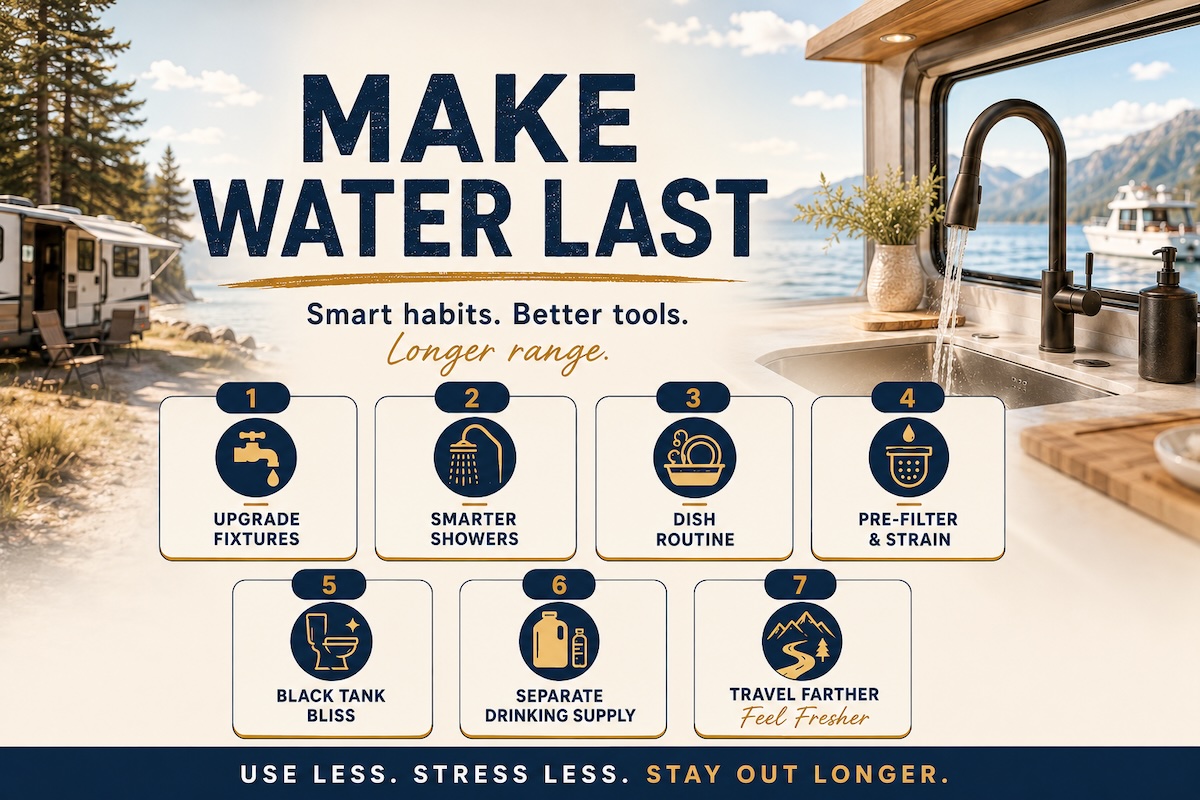
A hot shower shouldn’t require a strategy meeting. But aboard a boat or in an RV, fresh water and waste capacity can decide how long you stay somewhere good.
The trick is to cut waste without rationing comfort, and never save a gallon at the expense of a functioning toilet.
1. Find the tank that limits your stay
Start with your usable fresh-water capacity and the capacities of any holding tanks. Check which fixtures feed each tank and whether your marine toilet uses fresh or raw water. Some boats don’t have a gray-water tank at all.
For a day or two, watch how levels change with normal use. Treat gauges as estimates, especially when readings stick or jump.
A rig can still have plenty of fresh water when its shower’s gray tank is nearly full. Your smallest remaining margin sets the service schedule.
2. Fix waste before changing your habits
A dripping faucet or leaking toilet valve uses water without delivering anything useful. With fixtures off, unexplained cycling of an on-demand pump can point to a leak or pressure loss worth investigating.
Repair those problems before trying to squeeze another day out of the tanks. Check accessible plumbing connections for dampness, too.
A lower-flow showerhead or faucet aerator can help, provided it works with your plumbing. Some tankless heaters require a minimum flow to stay lit. Too much restriction can turn a comfortable shower into a temperature guessing game.
3. Keep the hot shower and cut the idle water
Wet down, pause while lathering, then rinse. There is no prize for making the whole experience cold and miserable.
At a measured two US gallons per minute, cutting three minutes of running water saves six gallons per shower. That also keeps six gallons out of a gray tank, if the shower drains into one.
Catch clean warm-up water in a clean container for cleaning chores rather than sending it straight down the drain. A showerhead pause control makes stopping the flow easier, but check the temperature when restarting before stepping back under the stream.
4. Make dishwashing a small batch job
Scrape food into the trash before washing, and wipe greasy pans with a used napkin or a little paper towel. Less debris in the drain means less material sitting in a tank or building up in plumbing.
Use a basin for washing, followed by a clean-water rinse, rather than leaving the faucet running throughout the job. Use the detergent’s recommended amount; extra suds require extra rinsing.
When practical, plan meals that share a pan. Dinner still tastes good without generating a sink full of cookware.
5. Don’t put the toilet on a water diet
For a conventional gravity-flush RV toilet, water helps move waste and keeps solids from accumulating beneath the toilet. Skimping can create a blockage that costs far more water and effort to clear.
Keep the RV’s black-tank dump valve closed between dumps, even at a sewer hookup. Letting liquid drain away continuously can leave solids behind. After emptying, add the starting water recommended by the tank or toilet manufacturer.
Marine toilets have different flush cycles and plumbing requirements. Follow the toilet maker’s instructions rather than copying an RV routine. Tank additives cannot compensate for inadequate flushing or poor tank management.
6. Protect the water you bring aboard
Use a known potable source and a hose intended for drinking water. Keep that hose and its fittings separate from sewer equipment and black-tank flushing gear. An ordinary sediment filter doesn’t make an unsafe source drinkable.
A small reserve in clean, food-grade containers buys breathing room between refill stops. Count it toward your load: water weighs about 8.3 pounds per US gallon. Secure containers against movement, whether the next sharp turn comes from a road or a rolling sea.
7. Plan the emptying stop before the tanks demand one
Identify suitable refill and disposal facilities before extending a stay. Confirm opening hours and whether the facility can accommodate your boat or rig. A pump-out symbol on a map is a starting point, not a confirmed appointment.
At an approved RV dump connection, empty black first, then gray to help rinse the sewer hose. For a boat’s holding tank, use a pump-out facility with a compatible connection and follow its operating instructions.
Don’t assume gray water can go overboard or onto the ground. Discharge rules depend on location, and biodegradable soap is not a permission slip. Use approved disposal facilities where discharge isn’t permitted.
Follow along with us at Anchors to Axles for more practical systems and ownership lessons behind life aboard Empire and adventures on the road.