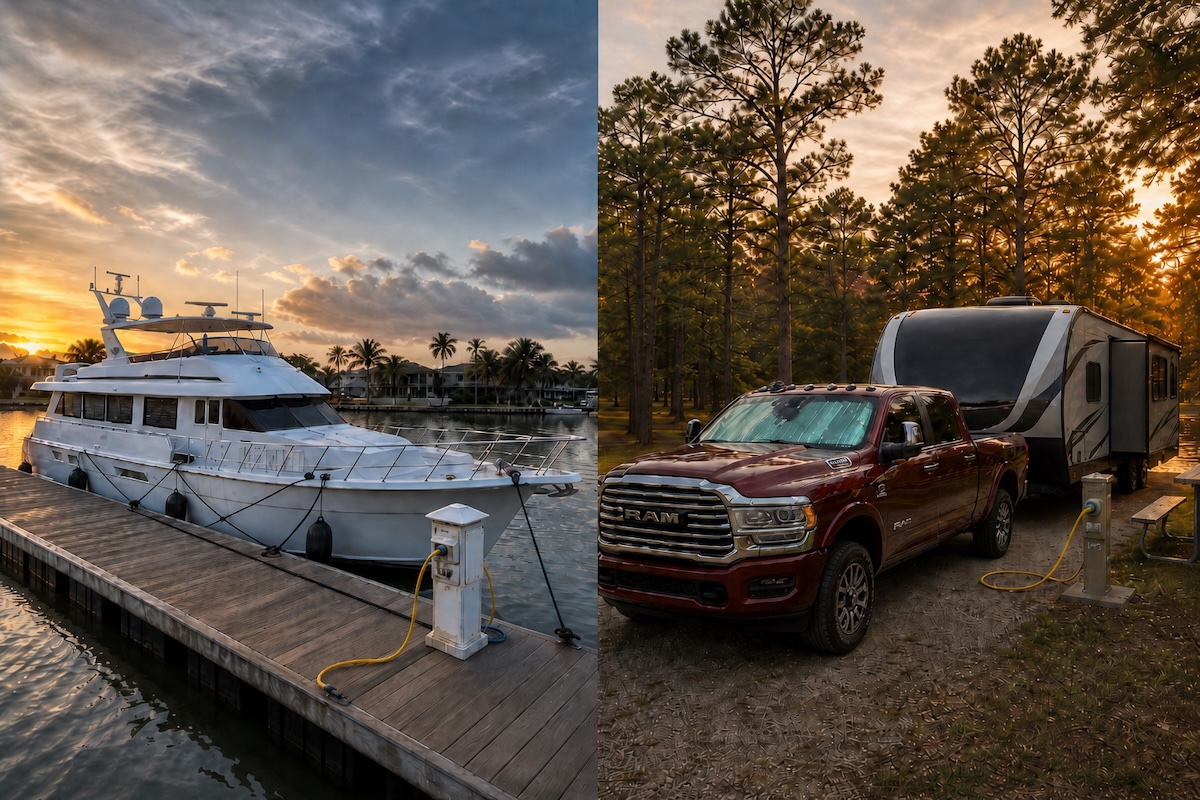
The prettiest spot on the booking map can be the worst place to sleep. An open-water view may come with an exposed slip; a shady campsite may sit beside the road everyone uses at 5 a.m. The scenery matters, but so does what happens after the welcome office closes.
At Anchors to Axles, we document life aboard Empire, a 74-foot Hatteras motor yacht, alongside land-based exploration. Both worlds reward the same approach: choose a spot for how it works, not just how it looks.
Start with fit, then ask about exposure
At a marina, usable depth at expected low water and room to maneuver matter as much as advertised slip length. A berth near the entrance may make arrival convenient while leaving you exposed to passing wakes or an overnight wind shift.
On land, a site’s overall length may not reflect its usable parking pad. A generous-looking space can still have an awkward approach. There also has to be room to open the slides, with somewhere permitted to park the tow vehicle.
Once the basic fit is confirmed, ask questions the booking map cannot answer:
- Which slips are sheltered from the wind direction in the forecast?
- Which campsites are away from through traffic and late-arrival routes?
Proximity cuts both ways. Being near the bathhouse saves walking, but its door may close all night. An end dock offers fewer passing pedestrians, yet may have less shelter. “Best available” means little until you explain what matters to you.
Shore power is more than an amperage label
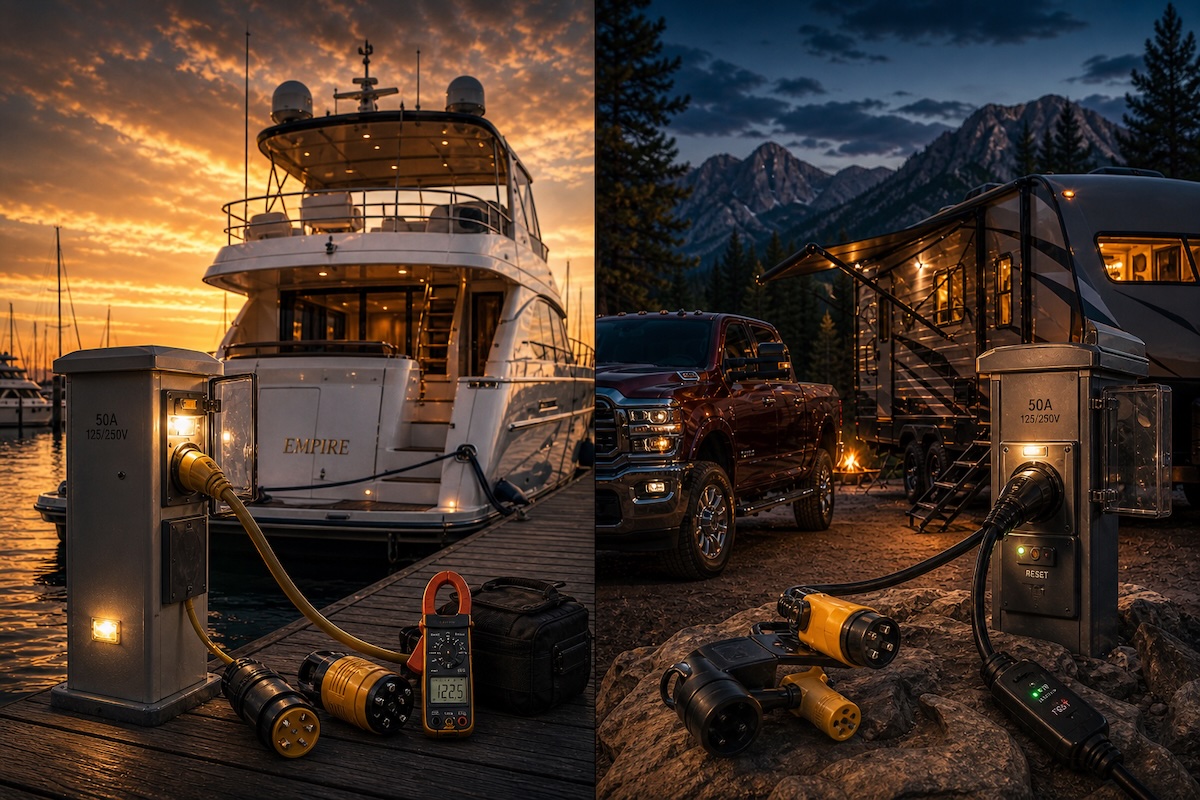
A pedestal marked 50 amps does not tell the whole story. Confirm the actual voltage and receptacle type against your boat’s or RV’s requirements. Marine and RV connections are not interchangeable simply because the amperage sounds familiar.
A simple plug adapter does not increase the supply’s capacity or make the wrong voltage safe. Larger loads, especially air conditioning and electric water heating, still have to share the available power. Staggering their use may be necessary.
Before connecting, look for damaged receptacles or scorch marks. Questionable equipment is a reason to involve staff, not an invitation to test your luck. Follow your boat’s or RV’s connection procedure, with pedestal power off while connecting or disconnecting.
At a busy facility, heavy demand can contribute to low voltage. Repeated breaker trips can point to a supply problem or a fault in your own installation. Have the cause checked rather than repeatedly resetting breakers or bypassing protection.
Sort out the hookup before the chairs come out. Moving to another site or slip is less aggravating before everything is unpacked.
Keep your good time inside your own space
Sound carries over water, and RV walls offer limited relief from a nearby outdoor speaker. Your neighbors can love the same lifestyle without wanting your soundtrack.
Follow generator rules and avoid unnecessary engine idling. Aim exterior lights at your own setup, not into the next boat’s cabin or RV’s bedroom.
A shared dock is a walkway, not overflow storage. Keep loose equipment out of the path and route cords safely. At a campground, keep slides and gear within your assigned space rather than borrowing the neighboring site.
Planning an early departure? Put the loose gear away the evening before. Packing chairs at a civilized hour beats introducing the entire campground to your storage compartments at sunrise.
Prepare for the night you are actually getting
A calm check-in tells you little about an exposed slip after the wind changes. Before bed, review the overnight forecast. Recheck dock lines and fenders for expected conditions and water-level changes, not just how the boat sat when you arrived.
At a campsite, retract the awning when gusts are forecast and secure loose outdoor gear. Flapping fabric can become expensive fabric surprisingly quickly.
Noise deserves an arrival check, too. Stand still with your own engine off before fully settling in. Road noise and nearby mechanical equipment are easier to judge without your own machinery competing. A distant highway may become much more noticeable once the campground quiets down.
If the assigned spot has an obvious problem, ask about moving while staff are available. There may be no alternative, but the conversation is more useful before midnight.
Deal with preventable rattles before adding white noise, and keep safety alarms audible. If forecast conditions could make the location unsafe, reassess the plan with staff rather than treating it as something to sleep through.
The premium view is optional. A workable spot that lets you rest is worth asking a few unglamorous questions for.
Follow our Anchors to Axles journey for more of the planning and practical ownership details behind life at the dock and campsite.