
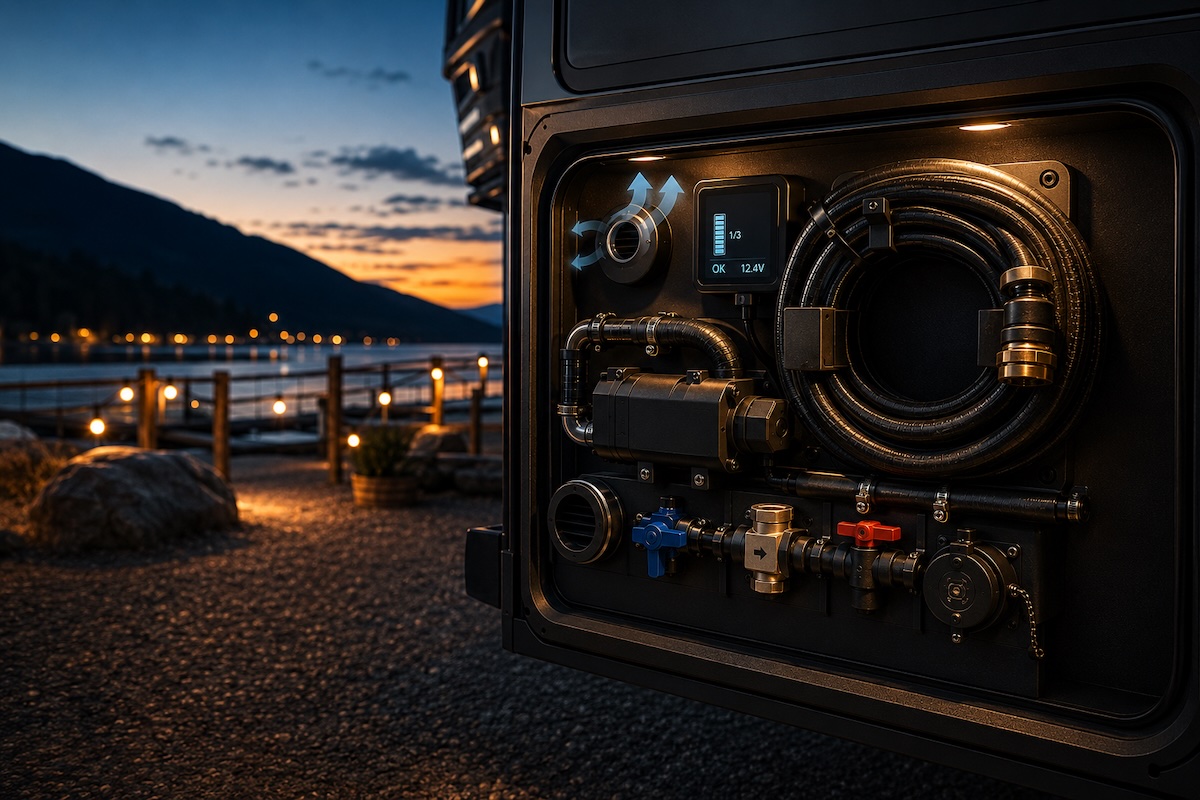
A great campsite loses some charm when opening the RV door smells like opening a holding tank. On a long haul, the fix is rarely a stronger dose of fragrance. It’s understanding where the air goes and keeping waste moving when it’s time to dump.
At Anchors to Axles, we connect life aboard the 74-foot Hatteras Empire with life on the road. Blackwater is an unglamorous place where that comparison earns its keep. Boat hardware isn’t automatically right for an RV, but the systems thinking transfers.
Borrow the marine mindset, not random marine parts
Marine holding tanks and RV black tanks both need an unobstructed vent to the outside. Incoming waste displaces air; emptying the tank requires replacement air. A blocked vent can interfere with draining or contribute to odors finding their way indoors.
Inspect accessible vent plumbing for damage or loose connections. Check the roof termination only with safe access, and follow the RV manufacturer’s routing and vent-cap guidance. Never cap a vent to stop a smell.
A marine carbon filter isn’t an automatic upgrade. An unsuitable or saturated filter can restrict airflow. Confirm compatibility rather than borrowing a part simply because it works on a boat.
Also separate a vent problem from an odor-entry problem. A toilet bowl that won’t hold water may have a compromised seal. Dry sink or shower traps can admit gray-tank odors, which are perfectly capable of ruining lunch without any help from the black tank.
Note whether the smell appears parked or moving. Travel airflow can draw odors through a leaking seal, making the timing a useful troubleshooting clue.
Treat tank readings as evidence, not a verdict
Internal probes can collect residue and report full immediately after dumping. That doesn’t necessarily mean the tank failed to empty. But deciding that every warning is nonsense is a risky alternative.
Start with a known empty tank, then note occupancy and days of use. Compare that history with the display over several cycles. It provides a cross-check, not an exact capacity calculation. Plan a dump before a remote stretch rather than gambling on a suspicious monitor.
Use the sensor manufacturer’s approved cleaning method. Persistent errors may warrant checking wiring or calibration where applicable. External sensors avoid direct contact with waste, but installation still matters.
Resist the chemical arms race. Household drain cleaners can damage components, and mixing cleaners or tank treatments can release hazardous gases.
A macerator changes the discharge options
A macerator chops waste and pumps it through a smaller discharge hose. That’s useful when an approved sewer connection is awkward to reach. It doesn’t give the pump unlimited range or an appetite for wipes.
Match the setup to the pump’s rated hose length and vertical lift. At a conventional dump station, gravity discharge is usually simpler and faster. The pump adds wiring and moving parts in exchange for more routing flexibility.
A few operating habits matter:
- Keep wipes and hygiene products out of the tank, including anything labeled flushable. Stick to human waste and suitable toilet paper.
- Don’t run the pump dry. Follow its operating sequence and duty-cycle limits rather than leaving it running while doing another job.
- If flow stops or the motor strains, switch it off. Disconnect power before servicing it, and don’t loosen a pump or hose connection while it contains waste.
The small hose still carries sewage. Store discharge equipment separately from drinking-water hoses and fittings. Less bulky does not mean less contaminated.
Make the dump stop deliberately boring
While connected to sewer, keep the black-tank valve closed between dumps. Leaving it open allows liquid to escape while solids stay behind. Use enough flush water to carry waste into the tank, then add the manufacturer’s recommended starting water volume after emptying.
At an approved dump point, secure the discharge connection before opening a valve. Wear gloves and avoid splashes. If both tanks share an outlet, empty black first and gray afterward. Gray water helps rinse the hose; it doesn’t sanitize it.
Keep rinse and black-tank flush hoses separate from drinking-water gear, with the backflow protection specified for the flush connection. Follow the manufacturer’s flushing procedure, including valve positions, and stay with it. An unattended flush can overfill the tank and send sewage into the RV.
Before packing up, check the connections for leaks. A drip caught at the dump station is a manageable problem. The same drip discovered later in a storage bay is a much worse afternoon.
A boring dump stop is a successful one. Follow Anchors to Axles for more practical boat-and-RV systems lessons, including the maintenance that never makes the postcard.