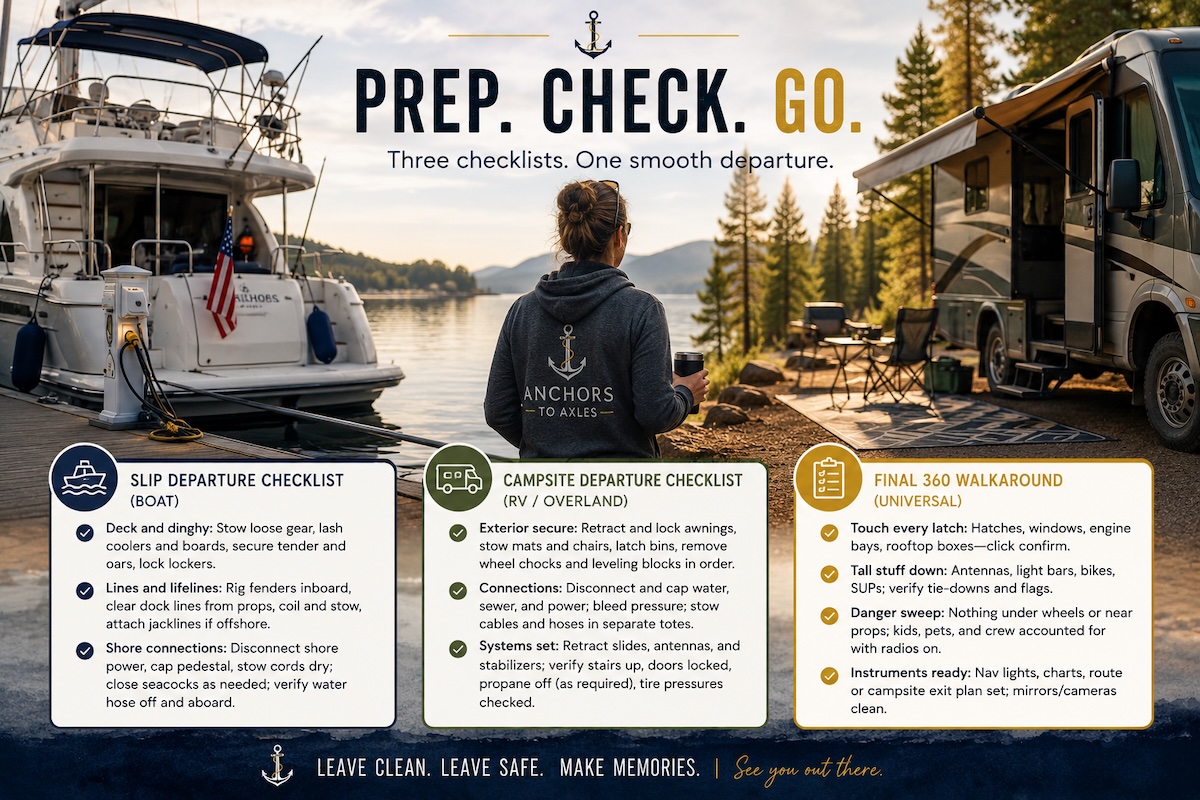
The first ten feet of a trip can get expensive. A loose chair goes overboard. An extended awning meets a tree. A shore-power cord gets asked to do a job it was never designed for: hold back a moving boat or RV.
At Anchors to Axles, we document the work behind life aboard the 74-foot Hatteras Empire and adventure on the road. Departure prep belongs in that story, even if nobody frames a photo of a neatly coiled hose. These three sweeps help catch the expensive little oversights alongside your boat or RV’s normal operating checks.
1. Secure everything that’s coming with you
First, look for anything resting somewhere rather than secured there. Calm water and a windless campsite are poor tests of how gear will behave in motion.
- On the boat, stow loose deck gear and secure anything carried outside. Cushions and portable chairs can shift in a wake or catch the wind.
- Check railings and the swim platform for items left out to dry. A towel draped over a rail is easy to stop noticing after a day or two.
- At the campsite, remove awning accessories before fully retracting the awning. Verify any travel locks or latches specified for it. “Looks closed” and “secured for travel” are different checks.
- Clear slide paths inside and outside before retracting them. A shoe caught inside can cause trouble just as surely as an obstruction outside. Confirm the slides are fully retracted and any required travel locks are engaged.
- Inside either setup, latch cabinets and secure heavy objects. The coffee maker that behaved beautifully at breakfast has not yet been tested by a hard stop or a roll.
Secure does not mean unreachable. Keep lifejackets and emergency equipment accessible rather than burying them beneath the newly stowed gear.
2. Disconnect what’s staying behind
Follow each connection from the boat or RV to its source. Don’t rely on remembering what you hooked up when you arrived.
- Turn off the pedestal breaker before unplugging shore power. Disconnect at the supply end first, keep connectors dry, and stow the entire cord.
- Shut off the water supply before removing a hose. Drain and stow it, then secure the onboard connection’s cap if fitted.
At a campsite, finish any dumping at an approved connection and close the tank valves. Drain the sewer hose before disconnecting it, then stow it and secure the outlet cap. Check for cable-TV leads or other temporary connections as well.
At the slip, dock lines are not utility cords. Keep the boat secured while you put away the hookups. Release lines as the departure requires, keeping loose ends out of the water and away from propellers. Fenders stay out until you’re clear of the dock.
Give the hookup area one last look. That includes the pedestal and the space underneath it, where an adapter or fitting can quietly become a gift to the next arrival.
3. Check the whole setup before the first move
Make this a physical walk-around, not a shouted “We good?” from the driver’s seat or helm. Look up from ground or deck level, then check underneath and along the departure path.
- On the boat, finish machinery and steering checks. Review wind and current, then confirm the path out is clear. Everyone handling a remaining dock line gets a clear assignment and release signal.
- For a towable, verify the hitch is locked and check the connections against its hitching checklist. Include safety chains where required and the breakaway cable. Test road lights and trailer brakes using the equipment’s procedure.
- On an RV, verify that jacks and stabilizers are stowed using the rig’s departure procedure. Remove wheel chocks only when the vehicle is secured and ready to move.
- Check storage-door latches and confirm roof-mounted equipment is in its travel position. Look for overhead branches and anything that could catch the rear of the rig as it swings through a turn.
One person can coordinate this final sweep even when several people help. Specific reports beat “all good.” Saying “shore power is disconnected and the cord is aboard” confirms an actual task, not a general feeling of optimism.
If a phone call or conversation interrupts a sweep, restart that sweep. Familiar jobs are especially easy to lose track of halfway through. Before moving, agree on a clear stop signal with anyone helping outside. A stop call means stop first and sort out the reason afterward.
Follow our Anchors to Axles journey for more of the prep and problem-solving behind life at the dock and on the road.