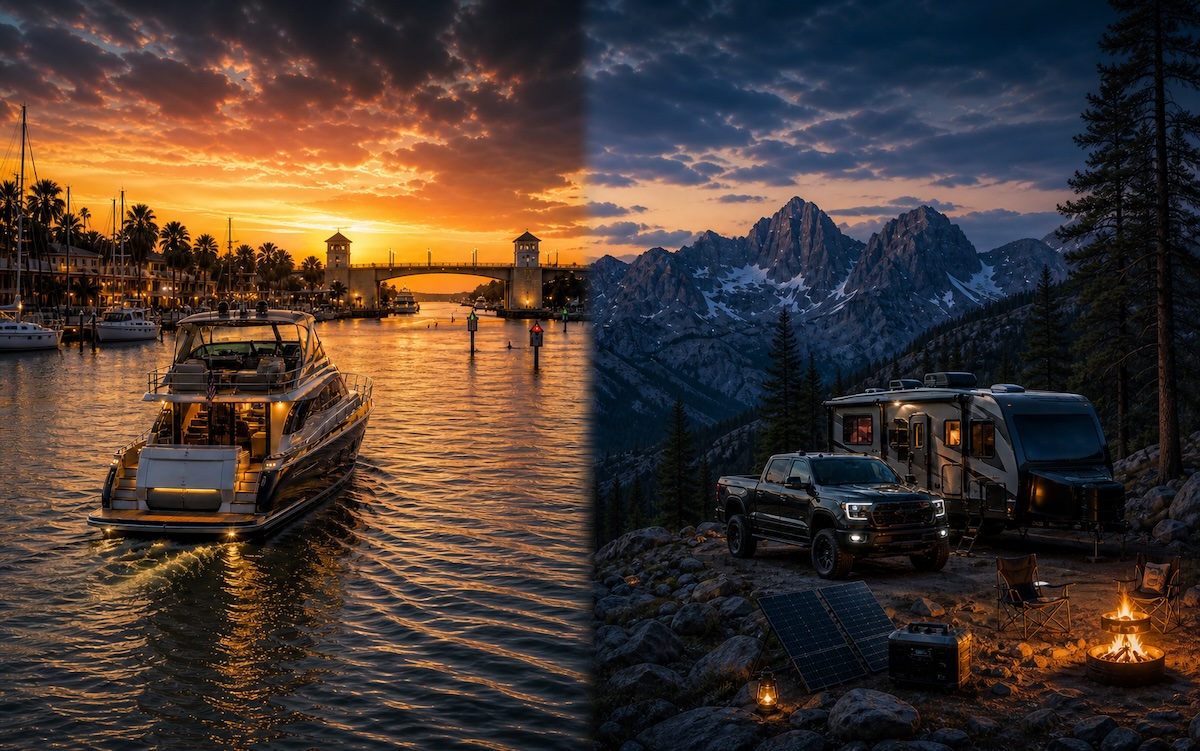
A week on the Intracoastal Waterway and a week off-grid in the Rockies both promise room to breathe. They also hand you very different jobs. On the ICW, a bridge opening can set your schedule. In the mountains, a cold night can make the battery monitor more interesting than the view.
At Anchors to Axles, we connect life aboard Empire, a 74-foot Hatteras motor yacht, with adventure on the road. For this comparison, picture a week of ICW cruising with overnight stops versus driving to one legal off-grid mountain campsite and staying put. Your first big-trip decision starts with that difference: do you want to keep moving, or settle in?
Fuel burn follows movement, not the scenery
The biggest fuel distinction is how often the main engine or engines run. Exact gallons require boat and vehicle data, not a scenic itinerary.
- For the ICW, multiply expected cruising hours by combined engine burn at your planned operating speed. Account for slow-speed sections separately, and add generator consumption where applicable.
- For the road, divide round-trip driving miles by realistic loaded or towing fuel economy. Include local exploring, and budget separately for any generator or heating fuel.
ICW currents change your progress along the route, so distance alone won’t tell you engine hours. Bridge waits and no-wake stretches can also lengthen the day. Going faster to recover lost time may cost disproportionately more fuel, depending on the hull and speed.
For a parked RV, propulsion burn stops at camp, but energy use doesn’t. Shade or clouds can reduce solar charging, and cold weather can increase heating demand. A long drive to the Rockies may still dominate the week’s fuel bill.
The honest comparison is the whole trip, including the return, not a cruising day’s diesel against a stationary campsite’s zero driving miles. A yacht spending several days at anchor also has a different budget from one underway every morning.
The mental load changes jobs
The ICW asks for sustained attention while underway. Shoaling and traffic don’t care that you’re on vacation. Bridge schedules and available stopping places limit how casually you can change plans. Crew who can help navigate or handle lines matter far more than another ambitious destination on the itinerary.
Towing or driving a large rig through the mountains also takes concentration. Once parked, though, the workload shifts toward managing supplies and keeping an exit available.
A campsite pin doesn’t establish that the approach fits your rig. Check road conditions and turnaround space before committing, along with current access and camping rules. In remote country, plan communications before losing cell service. An approaching storm may be a reason to leave early, especially if the access road becomes difficult when wet.
That makes the useful question less about which trip is relaxing and more about which responsibilities you’re comfortable carrying. Navigation all afternoon and conserving water all week are different kinds of homework.
What an ordinary day looks like
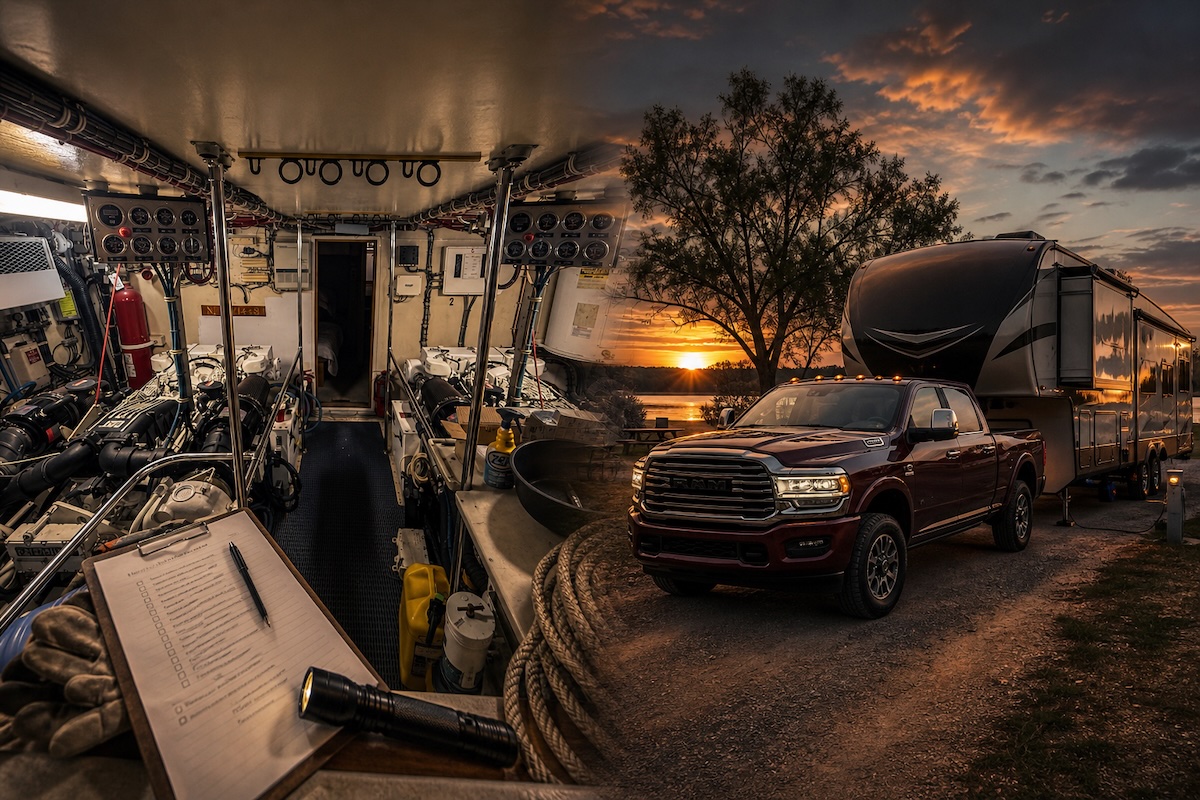
An ICW cruising morning starts with weather and route checks, then the boat’s predeparture checks. Departure time may follow the current or the next bridge opening. At the other end, anchoring or docking still takes work before dinner. The reward is a changing waterfront outside the windows.
At a mountain base camp, morning is more likely to begin with battery status and water use. You can spend the day hiking rather than relocating, but the refrigerator still draws power while you’re gone. Evening means checking the overnight forecast and whether your heat and power reserves can cover it.
A settled campsite gives you more control over the day’s pace. A cruising itinerary gives you variety without unpacking your home. Both are appealing, provided the daily work is part of the plan rather than an unwelcome surprise.
Choose the trip with room for beginner mistakes
For a first big trip, favor the setting where your equipment and basic skills are already familiar. Don’t make unfamiliar machinery and remote conditions part of the same experiment.
If the ICW wins, plan short legs with realistic alternate stops. Leave room for a weather day rather than promising yourself a new marina every night. A modest route gives you time to learn without turning every delay into a deadline problem.
If the Rockies win, test the setup for a night or two near services before committing to a remote week. Pick a legal campsite with manageable access and a clear exit plan. You can enjoy off-grid living without selecting the hardest road on the map.
Follow Anchors to Axles for more boat-versus-road planning as we document life aboard Empire and land-based adventure, including the upkeep behind the good views.