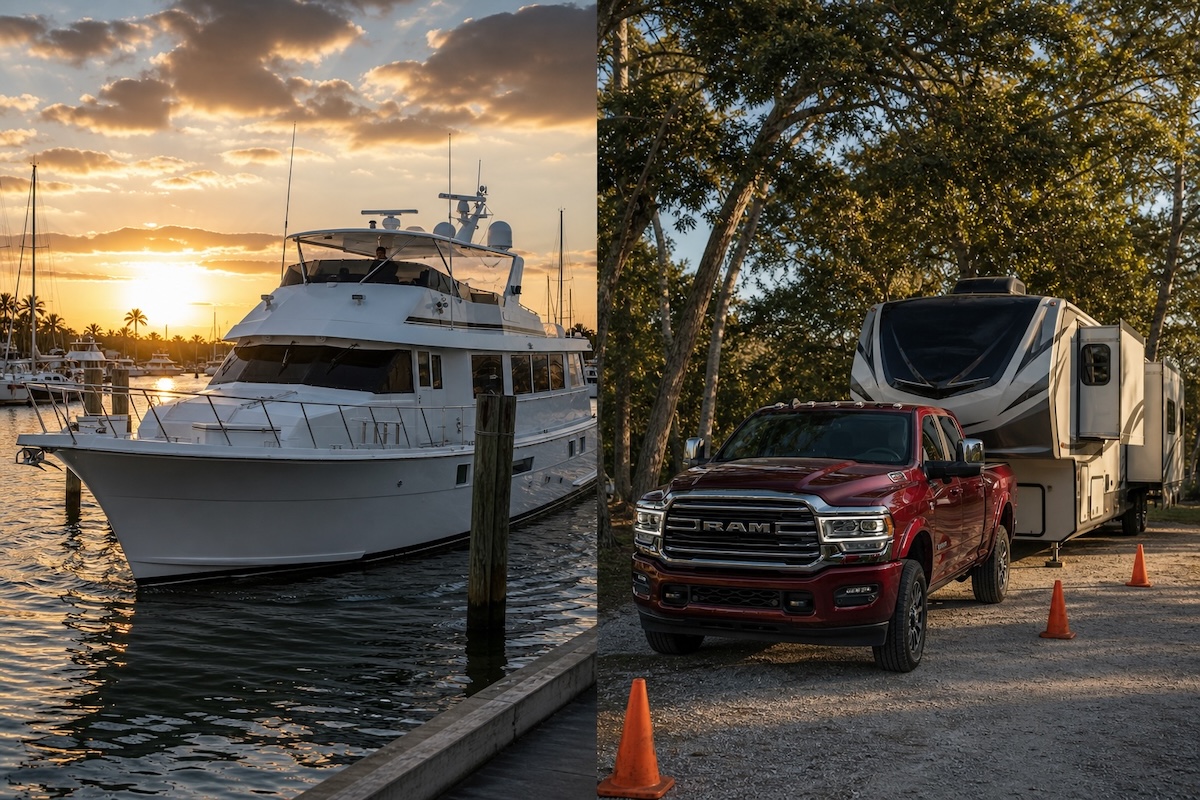
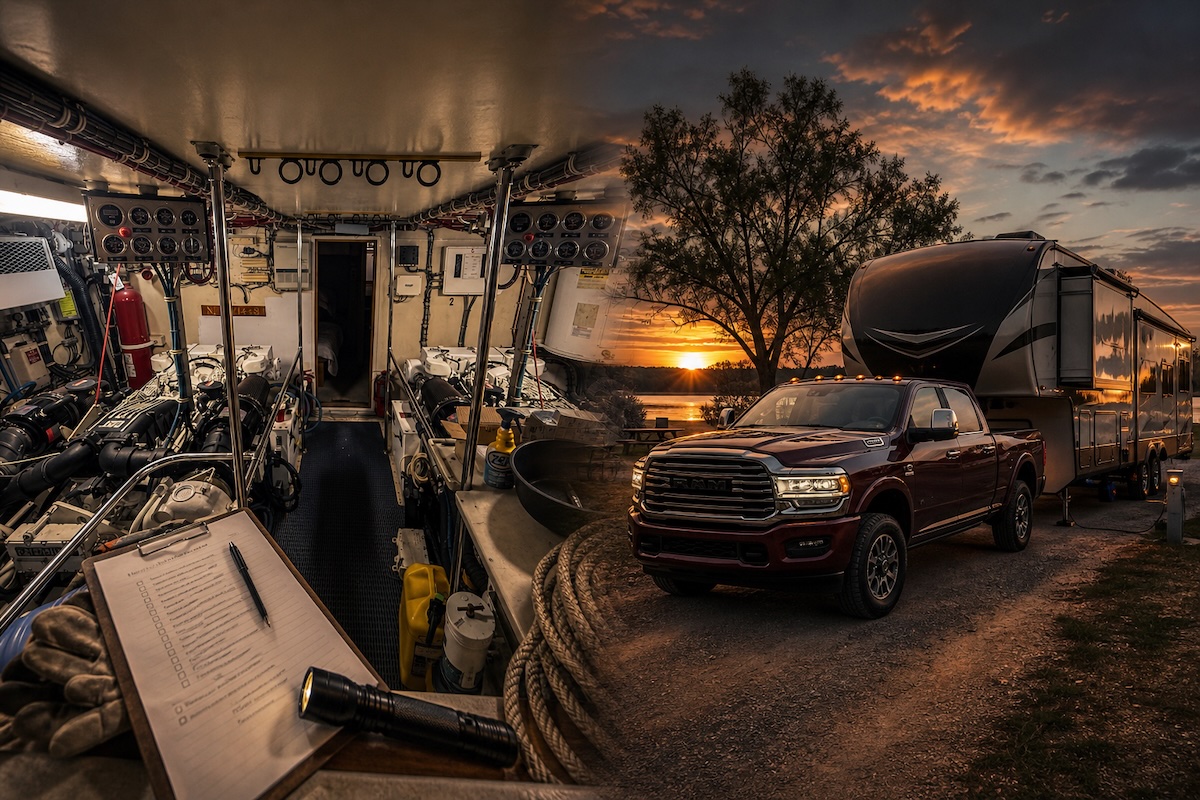
A shore-power cord left plugged in can ruin a departure before the trip begins. An RV hitch pin sitting on the picnic table can do worse. These are oversights with expensive consequences, worth catching while you are still parked.
Use this 12-minute routine as a final sweep for whichever rig you are moving. Maintenance, route planning and full equipment-specific checks come first, including cold tire pressures for road travel. Budget two minutes per stage, but stop the clock for anything unresolved. Twelve minutes is a target, not a deadline.
Minutes 0–2 Confirm the plan still works
Yesterday’s forecast is not today’s permission slip.
For a boat, review the latest marine weather and relevant tides or currents. Check whether your intended arrival still works with daylight and any bridge schedules.
For an RV, check wind and road conditions, then confirm the route suits the rig’s height and weight. The fastest route for a car may be a terrible route for your trailer.
Agree on what would make you postpone or change course. That conversation is easier before someone starts pulling lines or waving you out of a campsite.
Minutes 2–4 Check the systems for surprises
Confirm that fuel aboard either rig covers the planned trip with an appropriate reserve.
- On the boat, inspect the bilge for unexpected water or fresh leaks. Confirm that required ventilation and startup checks are complete. If engines are running, check gauges and alarms before leaving the dock.
- On the RV, investigate warning lights and look underneath for fresh fluid. Scan tires for visible damage or an obvious loss of pressure, even if you checked them earlier.
An unexplained alarm gets attention now. Turning down its volume does not count as troubleshooting.
Minutes 4–6 Verify nothing unwanted stays attached
This is the shore-or-campsite connection check, not the moment to trust a vague memory of putting something away.
On the boat, confirm shore-power cables and water hoses are disconnected and stowed. Shut off shore power before unplugging anything still connected. Docklines stay put until the crew is ready to leave.
On the RV, verify utility connections are disconnected and stored, with jacks and stabilizers in their travel positions. Check that slides, awnings and exterior steps are stowed. Look up for a raised antenna or other equipment above the roofline.
Inspect the actual position of the equipment, not just its control switch.
Minutes 6–8 Inspect what travels with you
On the boat, check that the anchor is secured for travel and deck gear cannot shift. Inspect tender restraints if carrying a tender. Look for loose line that could trail overboard or reach a propeller.
For an RV towing a trailer or vehicle, follow the coupling checklist for that specific setup. Physically verify locking hardware and retainers rather than judging the hitch by its appearance. Check electrical and breakaway connections, plus safety chains where required. Nothing should drag or bind during turns.
Confirm that required towing light and brake tests are complete. A connector being plugged in does not prove that the equipment works.
Minutes 8–10 Secure the living space and people
Latch cupboards and drawers. Secure loose objects, especially anything heavy enough to become a problem during hard braking or an unexpected wake. Check doors and hatches against the rig’s travel procedure without obstructing required ventilation.
On the boat, account for everyone and confirm appropriate life-jacket use. Brief line handlers on their jobs and tell passengers where to stay clear.
For road travel, everyone rides in a designated seat with the proper restraint, not in a towable RV. Secure pets. Before backing, agree on driver-and-spotter signals, including an unmistakable stop signal.
Minutes 10–12 Take the easily skipped second look
The check that is easiest to talk yourself out of is a fresh-eyes walk-around after everyone says they are ready.
It feels redundant. That is its job.
When possible, have someone other than the person who did the preparation take this pass. Give them a specific assignment: find anything still connected, unsecured or out of its travel position. On an RV, inspect both sides and overhead. On a boat, walk the accessible deck and inspect from the dock where safe.
Traveling solo? Reverse your inspection direction and point to each critical connection or latch. Make your eyes stop instead of letting familiarity do the checking.
Anything touched after inspection gets checked again. Opening a storage bay for one last item resets that bay’s check. An interruption is a reason to resume deliberately, not guess where you left off.
Release the last dockline or parking brake only after a clear all-ready confirmation. Silence is not confirmation.
For more of the work behind the adventure, follow us at Anchors to Axles, from life aboard our 74-foot Hatteras, Empire, to travel on the road.