A leaking hose is a much better discovery at the dock than halfway across a bay. The same goes for a damaged trailer tire in the driveway rather than on the interstate. Preventive maintenance buys you a chance to choose where a small problem gets fixed.
At Anchors to Axles, our world stretches from life aboard the 74-foot Hatteras motor yacht Empire to adventure on the road. Maintenance belongs in that picture, greasy fingerprints included. These seven habits help catch trouble early. Several take only minutes; none replaces scheduled service.
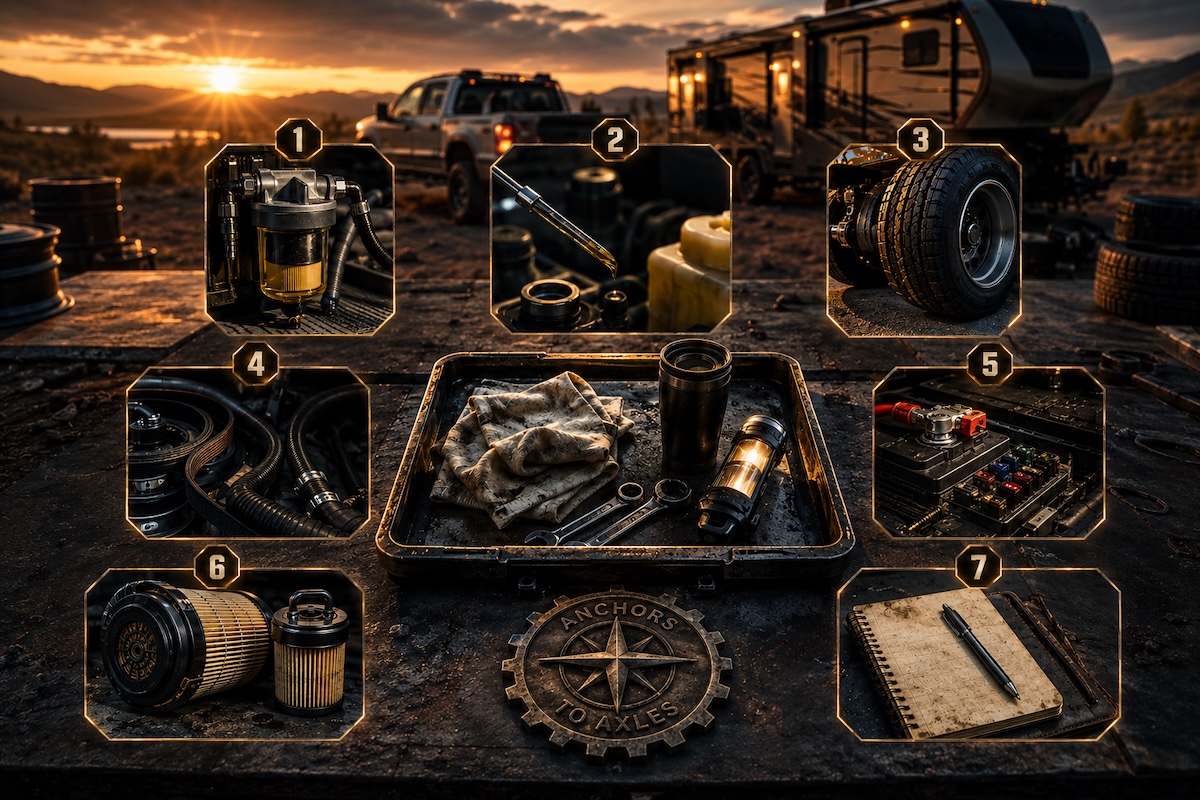
1. Check diesel fluids before the key turns
Follow the engine maker’s oil-checking procedure, including how long to wait after shutdown before reading the dipstick. Look beneath the engine for fresh fluid. Check coolant using the specified procedure, never by removing a hot, pressurized cooling-system cap.
The useful information is often the change between checks. An oil level that repeatedly drops deserves investigation, even if you keep topping it back into range. An unexplained rise in oil level matters, too.
Carry the correct fluids, but remember that a top-up is not a repair.
2. Watch the fuel, not just the gauge
Diesels depend on clean fuel. If your fuel-water separator has a clear inspection bowl, check for collected water or unusual debris before departure. For enclosed filters, follow the manufacturer’s inspection and draining procedure rather than opening things experimentally.
Drain only as directed, with the engine shut down and waste captured in a suitable container. The bilge is not that container.
Water that keeps returning deserves a search for the source. Repeated draining should not quietly become part of normal operation.
3. Check cooling before heat becomes the problem
An overheating engine can start with an ordinary obstruction. With machinery stopped, inspect accessible cooling components. Check visible marine raw-water strainer bowls without opening them; on a road vehicle, look for debris blocking the radiator or charge-air cooler.
For boats with visible wet-exhaust outlets, confirm normal cooling-water discharge after startup. Missing flow calls for shutdown and investigation, not extra throttle.
Watch temperature gauges underway. A steady climb beyond the normal operating range is a reason to stop safely and investigate, rather than wait for an alarm to settle the argument.
4. Follow the hose instead of scanning the engine
With machinery stopped and cool, visually trace accessible hoses and belts. Look for fraying or cracks. Pay particular attention where a hose passes a bracket: vibration can turn harmless-looking contact into a leak.
Give visible wiring the same attention. Damaged insulation or discoloration at a connection warrants investigation, not a cosmetic wrap of tape.
A focused look at contact points is more useful than opening an engine hatch, admiring the machinery, and declaring everything sufficiently engine-shaped.
5. Measure tire pressure before driving
Check tires cold, ideally before direct sunlight heats them. Use the vehicle or trailer placard and any manufacturer-approved load-based guidance. The maximum pressure molded into the sidewall is not automatically your target.
While checking pressure, inspect the tread and sidewalls. Include inner dual tires and the spare, where fitted. Uneven wear can point toward an alignment or suspension issue. A bulge calls for replacement before travel, not another hundred miles of optimism.
A tire-pressure monitoring system is useful while moving. It cannot spot sidewall damage for you.
6. Give the axle area ten minutes
Park and secure the trailer. Walk around it and inspect what is safely visible without getting underneath or lifting it.
- Look for loose or missing visible hardware and fresh grease escaping around hub seals.
- Inspect visible suspension parts for damage, including broken leaf springs where fitted.
- Check accessible brake wiring or hydraulic lines for chafing and leaks.
- Verify the hitch connection and safety chains, plus breakaway cable routing where equipped.
At rest stops, compare hub temperatures with a noncontact thermometer, measuring equivalent spots. Braking and sunlight affect readings, but one unusually hot hub warrants investigation before continuing. Keep your hands off a suspect hot hub.
This walkaround catches visible warning signs. It cannot establish the internal condition of bearings or brakes, which still require scheduled inspection.
7. Write it down before memory improves the story
Record service dates and the engine hours or mileage that apply. Note anything unusual, with a photo when it helps establish a baseline.
Two entries about adding coolant tell a different story from one forgotten top-up. Recurring belt dust is a clue, not merely something to wipe away.
Track the calendar-based service intervals, too. A low-mileage RV or lightly used boat can still be overdue by age. Put upcoming work on the calendar while the details are fresh, rather than relying on the famously precise maintenance interval of “pretty recently.”
Follow our sea-and-road journey at Anchors to Axles for more practical boat and RV ownership content, including the upkeep that makes the next departure possible.