We Paid $575,000 for a 74ft Yacht
After negotiating, talking about it, doing the survey and everything, we settled on a price of $575,000.
People always ask, and we want to be completely transparent about how much things cost with boating. Welcome aboard Empire. Thank you all so much for tuning in. We want to say a huge thank you to all of the veterans out there that are watching. We greatly appreciate your service. And thank you to those all over the world. We had everyone from six out of the seven continents. So thank you so much for tuning in.
Why We Kept Selling Houses
I came to realize we're kind of migratory. We're nomads. We're nomads in a way, in our spirits, because we just like a new change of scenery every couple of years. And we kind of went the expensive route of buying a house, selling it a couple of years later, selling it, buying another house. And we went through that cycle. And what we realized as we got in the boating initially was like, holy cow, why didn't we just buy a boat to begin with? By the time we paid for all the real estate fees on both sides, every single time, every few years, we just sat back and said, wow, how could we get more in that lifestyle?
And that's sort of how we arrived here. And we're going to share a lot more information during this video, kind of how we got started, what kind of led us here and sort of how we arrived to where we are today. Because what we've been trying to do with the past couple of videos is kind of catch you guys up with where we are now. And while we've owned this boat for over two and a half years, and we spent a lot of time talking about the upgrades that we did, the work that we've done. There is a history before that. This wasn't our first boat. We didn't just walk blindly into this boat.
There's no world in which we would have started with a 74-foot boat. Yes, we knew what we were getting into to say that.
Your Questions from the Comments
So there were so many comments that were like, how much does that cost? How much did you pay for this? How much did you buy the boat for? Are you going to make any money when you sell it? Probably not. That's what we're going to die. Probably not. But we'll dive more into that. And that's what we're going to talk about. As Trisha and I were talking about, the order that we were going to start filming these things, we just decided to knock this one out early. And that way, we could get more on to the exciting stuff, more on to the using the boat and that kind of thing.
And when somebody asks or wants to know, just kind of redirect them back to this video in the future. Trisha and I have done what we feel like is an extremely diligent job in responding to comments. I think we've gotten everybody, I'd say about 99% of the comments were super positive. And generally speaking, people loved it or had a comment about the boat or, hey, when are you going to do more videos? Or I'd like to hear more about this or that. And so we're going to try with this video to just try to fill in as many gaps as we can for how we got to today.
Shout out to Jeffrey Lee 9799. We are sitting in our aft deck instead of the cockpit is what we were always told what it was supposed to be called. But aft deck makes sense. I'm good with that. And we, I did verify it with AI. Jeffrey, you were totally right. So thank you. Yes. And then shout out to JimBus-z2r. Did some research on the previous owners of this vessel.
Empire's Past Names & Owners
I'm still missing some notes. Well, we actually thought we knew the history better than we did, but it was actually incorrect. So JimBus-z2r, we've actually reached out to you through the internet. So hopefully you'd be willing to talk to us and just fill in some blanks. And if there's any cool stories, we'd love to know. Oh, absolutely. Yes. So we are either the fifth or sixth owner. She's had many names, Paper Tiger being one of them. Aku Aku, I think it's how you pronounce it. P-N-E-U-M-A. So Numa is what we're guessing. Yes. And then when we bought the boat, it was I Got You. Bought the boat before they, they did some restoration to it.
They fixed a bunch of stuff on the boat. And as part of doing that, they removed the name so that the new owners, us in this case, could walk onto a boat with that already gone. So thank you to them for doing that. Yes, absolutely. We didn't have to remove a name. I mean, the side effect was for probably two and a half years. Yeah, so it took us two and a half years to put the name on her. The boat didn't have a name. She had a name. She is USCG documented with the name. But she didn't have the name on the boat until recently.
So yes.
Turks & Caicos: Where the Idea Started
All right. Here we are in our salon and the AC, and no wind. So we wanted to tell you how our boating journey began. In 2017, when we went to Turks and Caicos with a bunch of friends, we rented a house and we were there for like, I don't know, three, four days touring the island. I'd say the thought of owning a boat was so far from our minds that it wasn't even really a thought.
We stayed there with a few friends for a few days. Amazing place. We definitely want to go back.
And how the idea kind of got planted, the origin story for this was we went on a snorkeling local tour, almost got left behind by the snorkeling boat. Yes, it was so windy. We were in the water trying to swim to the boat, look down, saw amazing coral and the fish. And the next thing we knew, the boat was way over yonder. And me and James are like swimming our hearts out trying to get back to the boat. But luckily for us, the boat just kind of came and came and got us. That's the last part of that tour was kind of a rum punch. Iguana Island tour.
So I don't know if the island there is named Iguana Island, but that's how it was presented to us. So as we were driving over there, they were just giving us overflowing rum punches. And lo and behold, we came around this corner to kind of cut into the island. And there was this beautiful boat just anchored out. I don't remember seeing any people, but I remember just thinking to myself, holy cow, that would be amazing if we could do that. Like our impression that we just kind of grew up with was that it was so out of touch for the average person that it's not even something that we would ever consider.
Trisha wasn't quite there yet, but the seed in the back of my mind was like, what does it take to do that? Like, I want to do that.
Key West & the 5-Year Plan
Long story short, we were in Key West. Yes. Celebrating our 20th anniversary. We've actually been married 25 years now. So this was five years ago. Yeah, we were we were on the airplane leaving, of course. And I looked down and I saw all these boats and I was pointing to him as like, I want to do that. And James just said, OK, five year plan. Well, our five year plan actually turned into a one and a half year plan. A year and a half later, we actually had two boats by that time. So we learned about the Great Loop through this research.
So we would sit there and watch all kinds of people do the Great Loop and go through all the boating stuff, talk about the problems that they had and the problems they fixed. And that seemed a little scary at first to me. Researched it for what, like maybe a year, year and a half on YouTube. Yeah, just watched everything we could. We were reading about it. Yeah, it was right after COVID and we were ready for a change.
Our First Big Boat: Carver 570
We had just built a brand new, large custom home. So we ended up selling that house and buying a Carver 570 Voyager Pilothouse. That was sort of our first foray into boating as a couple. I had grown up on Lake Erie and my dad had a 25 foot fishing boat. So that, you know, you could trailer. It was nothing big. Like we mentioned in the last video, we were both in the Navy. We were both sonar technicians. I ended up traveling the world a lot more than Trisha did. But it just further kind of reaffirmed our affinity to water and the ocean, which I feel like is kind of human nature.
But it's just our happy spot. So circle back. We bought the Carver 570. We went through a major refit period with her. She was in extremely rough shape when we got her. Mechanically, she was okay. But everything else was not so hot. She didn't even have floors in the state rooms. They had ripped out the floors and hadn't replaced it. So it was subfloor in the state room. There was some cork tile in the salon and she was terribly chalky. Like she hadn't been waxed in who knows how long. So she definitely, cosmetically, she really needed some help. But engine wise, she was actually great.
Learning with Captain Wes
Our first experience with big boating was we hired a captain named Wes to kind of teach us, like basically just not let us screw ourselves. Right. He was our babysitter though, because we actually did the majority of the work driving, but he did have to step in a couple times docking at first because it was so windy when we were bringing her down. We kind of learned by sticking our feet in the water. It was from Kentucky Lake to Nashville, which isn't a particularly long trip. However, there's a lot of different kinds of boating. You got a lock to go through, which was new to us.
Yes. Some river boating. You go through downtown Nashville. There's some lake boating. And it's an active waterway. So we had to contend with the tugs and how to learn how to navigate those waters with the tugs, which I absolutely love. Yeah. And I grew up around cars. Some of it was hands-on. Some of it was not. But just through my life, I've been around a lot of people that were mechanical in nature. So I just kind of picked up a lot on it. And it was a big interest of mine. So Wes did a great job of just teaching us how to do really good engine room checks.
I mean, I still do a lot of the stuff he taught us back then.
The Bow Thruster Broke on Day 2
When the bow thruster broke on the second morning, when you look back, you're like, thank God that happened. Because I know a lot of my friends and a lot of people that boat kind of rely on the bow thruster because maybe they had a reliable one the whole time. Mine was broken from the morning of day two. So looking back, it's been phenomenal for me because I never really learned to depend on one. And we do have a bow thruster on this boat. And I've certainly used it here and there. And I'm not against it. It's a tool on a boat. I'm not in the camp of, you know, a real boater never uses bow thrusters.
It's a tool. It's there. It's just like everything else on the boat. If you need it, use it. I have no problem with it. But since our first big boat for the first two years that we really learned how to boat, how to use it, how to deal with a big boat, never had one. So looking back, it's been phenomenal now because while our bow thruster took quite some time to get repaired and it's almost done, I've docked this boat countless times without a bow thruster.
Why We Bought a Second Boat
Our Sessa. Why did we buy the Sessa? We finally got our Carver 570 home, used it a lot. While she was being refit, I knew that I wanted to get my captain's license.
A large part of the time from the Navy counted towards that. Not as much as I initially hoped. It turns out a sonar technician, while we do aid in navigation with depth and all that stuff, isn't on the Coast Guard list of major jobs for a captain's license. I had several friends on the dock that were getting it. So it was a great time to kind of learn and grow with them. And we're just kind of, we all kind of did it together. So in order to get the last remaining captain's hours, we did the most horrific mistake that I believe you can ever make in boating.
As far as owning things, we bought a second twin diesel 37 foot express cruiser. It was a Sessa Marine. It's, even though I didn't know it at the time, it's my favorite boat of all time. It's hard to imagine that we would ever have a boat that I love as much as that one. I love this boat. It's phenomenal. She's very, very close to number one for me. But with the much smaller express cruiser style boat, I could do engine room checks and less than three minutes, check everything on the boat. She could be untying while I'm doing that and we're just out on the water.
It was so much easier. It was. It was a lot easier to get her in and out of slips. And then another thing with smaller boats is your slip fee is considerably cheaper. That's right. For, for your, your long slips or even when you're traveling in the water, when you dock for a night, I mean, there is that. So that's kind of our boating history. That's a period of years. And that's kind of how we've learned all the stuff that we know now for the most part. And from a mechanical perspective, owning two boats, things failed. I had to get in there and replace belts, change alternators.
And Trisha's changed alternators with me and all kinds of other things.
Moving Both Boats to Florida
How we got to this boat is both of those boats were in Nashville, Tennessee. We wanted to be in Florida. It was kind of a cold winter in Tennessee that year and we were just sort of over it. So we said, screw it. We both want to move to Florida. Let's move to Florida. So that summer we actually moved our Carver 570 to where we are now. Took a couple week break and then moved our other boat over here. Then here for a while. And what we realized is while those boats can certainly do well in the ocean, can certainly do well in coastal waters. In fact, they're great in coastal waters.
For the type of adventures that we wanted to do, like going to the Bahamas, being out in the ocean a lot, they were less than ideal for what we wanted. Yes. So we ended up selling the Carver 570 and we actually sold the Sessa Marine 37 foot boat to another awesome dude. Prior to selling the littler boat, our intention was to actually just keep that one. Like I said earlier, I loved it to death. If I can, I'll put a picture up here so you guys can see what it is. There was a lot of reasons to love her. And we actually lived on her for almost a month and...
Oh yeah. It took about a month to get her to Florida. After doing the first one and coming back and doing the second one, we were kind of over it for a little bit. So we... We had a lot of downtime after bringing both boats down from Florida. Yeah. So our plan with a smaller boat, it all got changed because we were going to take it to the Bahamas, do that for a couple of years and just enjoy her for what she was. And she would have been awesome in the Bahamas. And that was our plan.
How We Found Empire
A close friend of mine who's also a broker, we had gotten to talking and he knew that this boat that we're sitting on right now was for sale and kind of changed our direction again because I kind of fell in love with it. I love the walk-through engine rooms. I love the Caterpillars. I knew that we wanted to live on a boat. So we changed our plan.
What We Actually Paid
All right. Here we are in the dining area of the salon for the final piece that everyone has been waiting for. We're going to tell you how much we paid for the boat and we're going to break down some of the maintenance costs that we've spent over the past two and a half years. We found the boat in Wilmington, North Carolina. A very popular wholesaler had purchased the boat from the previous owner. They had pulled the boat out of the water, done multiple things to the boat. It spent some time in their hands while certain things got repaired and fixed, which was very awesome. I can't remember for the life of me what the original asking price was, but after negotiating, talking about it, doing the survey and everything, we settled on a price of $575,000.
And during the haul out, during the survey, one of the stabilizer fins was rubbing up against the hull of the boat. And there was some evidence that despite the maintenance records being up to date on them, that there were some issues.
Took $10,000 off the purchase price. So we landed at $565,000. We closed on the boat the end of May of 2024.
Bringing Her Home: Fuel & Marinas
First, we owned the boat expense. Yes, that was a big expense because we pretty much had to put... About 1,500 gallons of diesel on the boat. Yeah, so that was probably, I want to say $3,600 that we spent that day. So for the rest of the trip, we did the ocean because that's what this boat is made for. And I think overall for that trip, it was probably close to $10,000 after paying for fuel, which fuel was a big chunk of that. I think we did seven nights in marinas. And for a boat this size, it's about $250 overall. And that includes electric and water. So after fuel and...
You're saying it's $250 a night? Yes, $250 a night. So I think around overall, it was about $10,000 to bring the boat down from Wilmington.
Why Our Costs Ran High
I'm going to go a little bit faster through the rest of the items that we've spent money on this boat, at least the major items.
And one thing that I should tell you before we go down this path, anybody that knows us will tell you, we don't do the minimal work that's required ever. We always try to make things better. We always decide to do things that cost more, like adding plexiglass above stabilizer. Every part that was taken off was powder coated in the engine room, for example. So the cost that we're giving you is a cost that we chose to accept. So there's no doubt in my mind that if you just did the bare minimum, the cost would be far less expensive than what we paid. We just went above and beyond for everything.
And I'm not saying that to defend the cost. I'm only saying that if you want to go on this adventure, you want to have your own boat. Our numbers are only a reference based on somebody doing as much as they could to things that they were touching.
The $60K 1,000-Hour Service
So our motors had 4,000 hours on them, which is kind of a big number for a boat because every thousand hours, there's a major maintenance period. We spent $60,000 on our 1,000 hour maintenance. And like I was saying a second ago, if we had just done the bare minimum, we probably would have paid half of that. So like, for example, if there was something wrong on one motor, we went ahead and replaced both parts on both motors. For example, the alternators. We redid a lot of hoses.
Some were had cracks in them and needed replaced. But our mentality is, if we're doing that hose, let's just do a bunch of the other hoses and get ourselves caught up. So a lot of that cost was simply me being pedantic or OCD about what we did. And as I mentioned, every part that came off the boat was powder coated when it came back on the boat. The next item was the new exhaust elbows. That was $12,000 for four of them because we're twin turbo on each motor. That did not have to be done. We had an older style that were known to fail at some point.
So instead of deferring that cost for a few years, we had custom ones made that were known to last for much longer and be much more reliable.
Stabilizers, Props & Bottom Paint
All right, so the next thing that we had was, as I mentioned in the previous video, we've pretty much redone our entire stabilizer system. We have Naiad stabilizers. We knew when we bought the boat that we were going to have at least $10,000 of expenses. As we got into it, we found that the shafts had pitting, had issues, major components needed maintenance done, in order to not defer things again, we went above and beyond and basically rebuilt the entire system. Would not have to do that. We could have done that for far less. However, knowing what we wanted to do, knowing that we want to be in the ocean all the time or as much as possible, it was a worthwhile cost for it.
So during our first yard period, one of the things that we did, propellers hadn't been tuned, to the best of our knowledge, anytime in the last few years, spent about $10,000 to have them analyze it. As it turns out, they actually were a little bit off. So the next expense was the bottom paint. We had bottom job done during our first yard period when we took the props off and had them tuned. That was the $17,000. It wasn't all bottom job, though, for that $17,000. I'd say a good third of that expense was spent on the AC units. We had the boat out during the summer and it was rather warm.
So we actually paid to have cooling towers set up in place to keep the boat cool. The bottom paint is pretty much a necessity. Oh yeah, absolutely. You just have to do it. You don't have to do the cooling tower. Many people don't, that was something that we chose to do.
An annual expense that we have, once a year, we have our fuel polished. So what that means is some guy comes out with a big pump, connects to our fuel tanks, runs all of our diesel through much smaller filters than we use on the boat normally. And what he's doing is pulling out any algae or any water that may be present.
The AC Surprise
The next thing that we did, and we actually spent way more money on this than we anticipated. We didn't predict this one. So we have eight AC units on this boat and that means that we have a compressor and a exchanger or a handler. So our plan when we bought the boat was to do one a year. So through a period of eight years, we would just rotate through the ACs and just continuously have updated modern ACs. The coolant in there changes. We had R22 and all of ours, which is old and it's getting harder and harder to get. That was several iterations behind what the modern coolant standards are.
So we just figured if once a year we bite the bullet, cycle through all the ACs, we'll both update the coolant and update the boat and just know that our ACs are good. So we spent $8,000 to $12,000 on that. And that's $8,000 to $12,000 per unit. Some of our units have multiple air handlers. So we ended up doubling our initial plan. So when we got the boat here, one of the first things that got replaced was two of them, which actually turned into an additional handler because, as Trisha had mentioned in the previous video, in the salon, it's a really big area. There's a lot of windows.
It was initially one handler. We broke that down into two handlers to just make it more efficient.
Electronics, Batteries & Lightning Damage
I ended up buying used Garmin products. So we got two MFDs. The Radar. A brand new, well, brand new to us, Radar, which we talked about in the last episode. We have one ancient one and one modern Garmin one. And we added AIS. So that total bill came to around $7,000. We replaced all of the 8D batteries.
We were, we had just gotten back home. The boat needed to run. We wanted to use it. We were doing all kinds of engine maintenance. So we like to do sea trials and stuff after major engine stuff. We are going to upgrade the battery system, but we have the ancient 8Ds. We needed to replace them fast. We didn't have time to think through the whole thing. More to come on that, but that was $1,300.
Okay. So the next expense on our list was due to lightning damage. Two boats next to us also had damage. We don't think that our boat was struck by lightning, but lightning came close to, close enough to the three of our boats to damage a couple things. In our case, we had to replace an ECM, which is the electronic control module for the starboard motor. That was $3,000. So we bought a refurbished one. We think during that same lightning strike, two or three components of our hydraulic bow thruster were damaged, mostly sensors that disabled the system. As part of this expense, we actually rebuilt the reservoir, replaced all the lines, did a lot more work than you would absolutely have to.
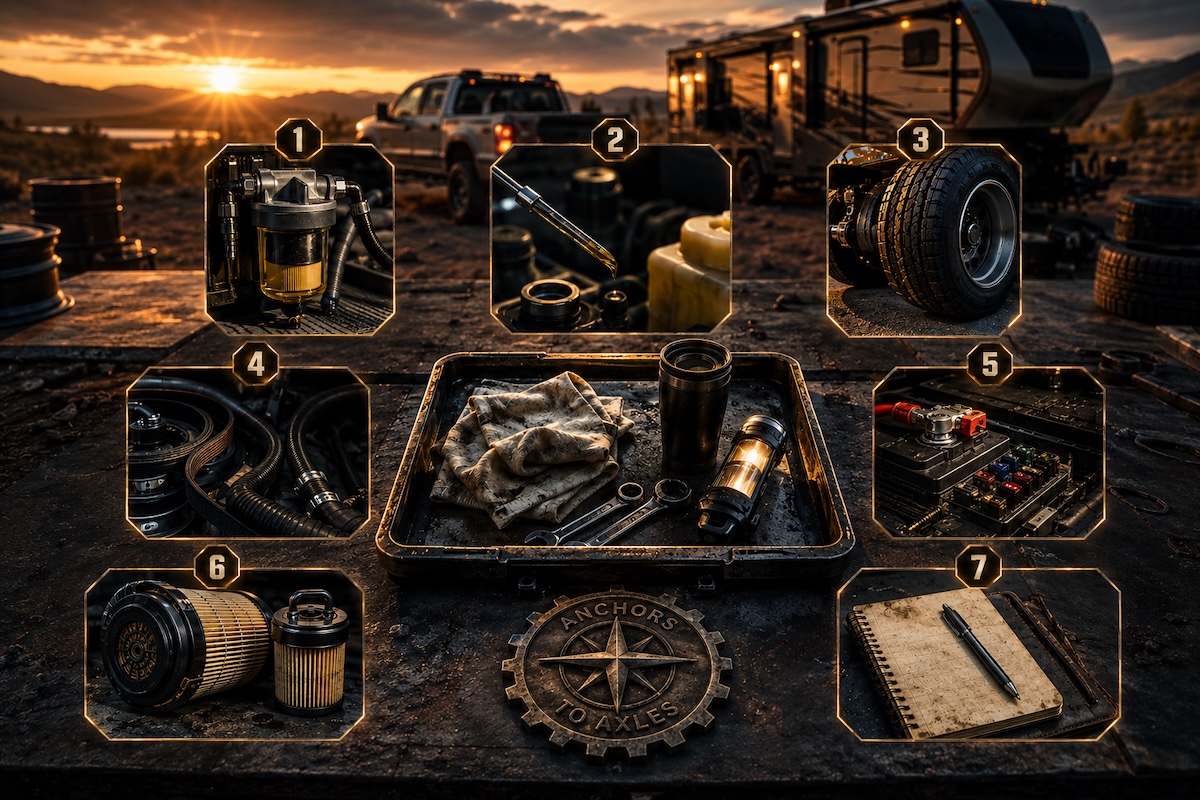
Another optional thing that we did is we replaced both Racor units. So we have twin Racor units for each motor, and basically that's the first fuel filter. We could have gotten by with the ones that we had. There were a few micro cracks in the plastic that was letting a little bit of air get in. So that's a total of all the major expenses that we paid for this boat.
Monthly Costs: Slip & Insurance
Talking about the monthly expense. So our slip, between our slip and electric, it's a little over $2,000 a month. We have the bottom cleaned twice a month. And depending on whether they need to replace zincs or not, that's somewhere in the neighborhood of $300 to $500. Well, we have insurance. Yeah, we do have insurance. And insurance is about $850, $900 a month for this boat. All right. So I think that concludes the major expenses that we've undertaken on this boat. And hopefully that gives you a deeper understanding of what you might have to do, or many of you probably have already done it, what it all looks like.
From Repair Mode to Maintenance Mode
So we expect, and what we've already observed over the last year or so, is our expenses have gone way down on this boat because now we're doing mostly cosmetic things or things that we want to improve cosmetically. We will talk about those and break down those expenses too, but they aren't required expenses. So we are in maintenance mode now. We're not in repair mode. We spent a lot of our money during repair mode getting her back to where she needed to be. So from here on out, it's just your normal maintenance, which shouldn't, knock on wood, shouldn't cost that much. Yeah, unless something major happens, we won't be looking at a lot of those expenses moving forward.
Right. And the past year has kind of held up already. We're kind of enjoying the period of the boat right now where not much needs to be done. We can just use it, focus a lot of our time on upgrades, and just make her the way that we want to make her. Thank you all for watching as we broke down the cost of owning a 74-foot yacht and bringing her back to where she needs to be. We greatly appreciate your support. Please like and subscribe and follow along for more videos to come. And if you have any questions, you felt like we missed something, or anything along those lines, please leave a comment, and I'll do my best to answer them.
Thank you. See you guys on the water.